China's lunar exploration program postponed the Chang'e-7 mission to the lunar south pole on August 24, 2026, citing bad weather at the Wenchang Satellite Launch Center. The same day, NASA announced the selection of 18 new Phase II and Phase III concepts under the NASA Innovative Advanced Concepts (NIAC) program, including a proposal to send 10,000 "femtosat" spacecraft — sub-gram-scale satellites — to Saturn as a long-duration atmospheric probe. The two announcements bracket a week that captures the contrast between China's operational cadence and NASA's long-arc research agenda.
The Chang'e-7 Delay
Chang'e-7 was scheduled to launch on a Long March 5 from Wenchang on August 24 at 03:00 Beijing time. The China National Space Administration (CNSA) called the launch at T-2 hours after ground winds at the Wenchang pad exceeded the Long March 5's 12-meter-per-second upper limit for several consecutive hours. The launch has been rescheduled for the next available window, which CNSA said is "no earlier than August 28, subject to weather." Chang'e-7 carries an orbiter, a lander, a rover, and a dedicated "hopper" probe designed to descend into a permanently shadowed crater to search for water ice. The mission is China's first to target the lunar south pole and is a precursor to the crewed lunar landing China has targeted for 2030.
The NASA NIAC Selections
NASA's NIAC program selected 18 concepts for Phase II (~$500,000) or Phase III (~$2 million) funding on August 24. The most ambitious of the 18 is the Femtosat Swarm to Saturn proposal, led by a team at NASA's Jet Propulsion Laboratory. The concept envisions 10,000 sub-gram-scale satellites, each weighing less than 100 milligrams and carrying a miniaturized sensor suite, launched as a single swarm on a multi-year solar-electric-propulsion trajectory. Once at Saturn, the swarm would deploy into the planet's atmosphere to make coordinated in-situ measurements of atmospheric composition, dynamics, and chemistry over a 30-day window before the satellites are destroyed by atmospheric entry. The proposal is a Phase II selection and will receive two years of funding before being considered for flight.
The Other 17 Concepts
The other 17 NIAC selections cover a range of physics and engineering. Highlights include a magnetoshell plasma propulsion concept that could enable a 90-day transit to Mars using a solar-wind-derived magnetic field as a drag-reducing sail; a Venus atmospheric habitation concept that envisions a 30-day crewed mission in a balloon-borne habitat at 50-kilometer altitude; and a concept for autonomous lunar pit exploration using tethered micro-rovers that could map lava tubes without human supervision. Two of the 18 selections — including the Femtosat proposal — are led by JPL, four are led by university teams, and the remaining 12 are led by NASA field centers or commercial partners.
Why the Contrast Matters
The Chang'e-7 delay and the NIAC selections illustrate the two ends of contemporary space exploration. China's program is operationally focused: launch, land, sample, return, repeat. Every mission is a stepping stone to the next one, and the 2026-2030 manifest is full. NASA's NIAC program is the opposite — it funds ideas that are 10-30 years from flight, with success measured by whether the concept survives the Phase II and Phase III gauntlet and is eventually picked up by a flight program. Both approaches are valuable, but the operational cadence of the Chinese program is now visibly outpacing the equivalent US programs in cislunar science.
What to Watch Through Year-End
Three checkpoints follow. The rescheduled Chang'e-7 launch, now expected no earlier than August 28, will reveal whether the Wenchang weather clears or whether the mission slips further into September. NASA's NIAC Symposium, scheduled for September 9-11 in Huntsville, Alabama, will be the first public forum where the 18 selected teams present their concepts in detail. And the SpaceX Starship Flight 14 launch, targeted for the August 30 to September 6 window, will be the first orbital test of a fully reusable system — a US operational milestone that would, if successful, materially narrow the cadence gap with China.
Related Articles
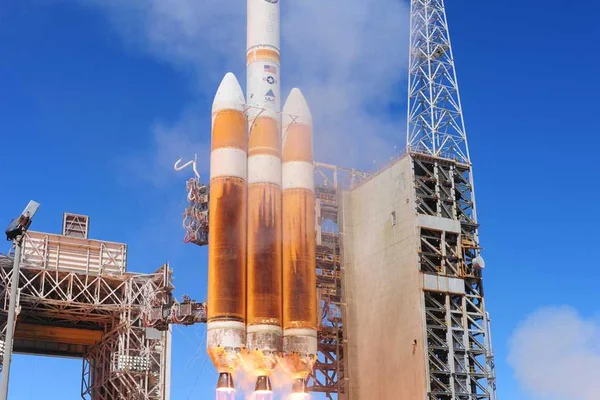
SpaceX Flies Falcon 9 Booster For Record 37th Time as NASA Readies Roman Telescope
B1067 launched 29 Starlink satellites from Cape Canaveral on August 25, while NASA's Nancy Grace Roman Space Telescope was encapsulated inside a Falcon Heavy fairing on August 24 ahead of a targeted August 30 liftoff.
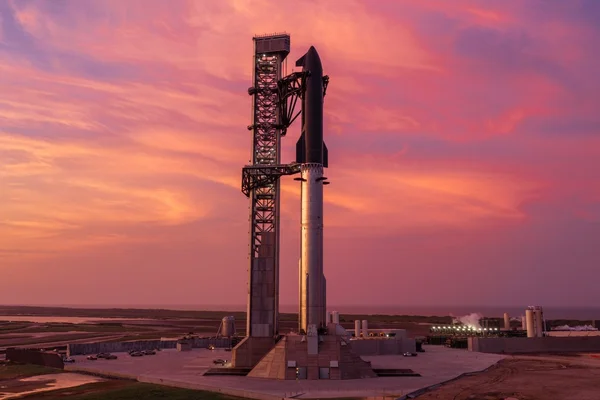
SpaceX Hits 100th Falcon 9 Launch of 2026 as Trump Signs National Space Policy Targeting 1,000 Annual U.S. Launches
SpaceX completed its 100th Falcon 9 mission of 2026 on August 22, lifting 27 Starlink satellites from Vandenberg. The same day, President Trump signed a new national space policy directing NASA and the Department of Commerce to enable 1,000 U.S. rocket launches annually by 2030.
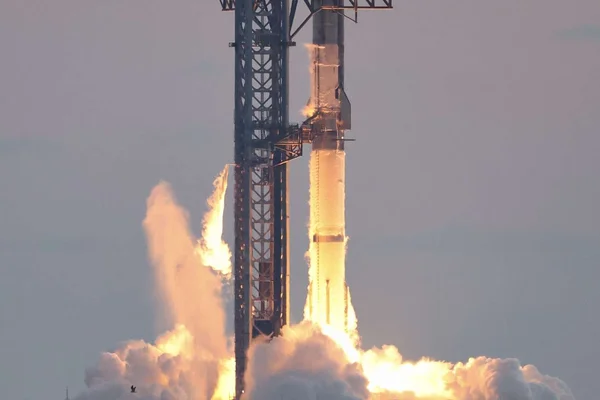
SpaceX Completes Starship Flight 14 Static Fires as NASA Administrator Isaacman Targets Artemis III for June 2027
SpaceX completed single-engine and full six-engine static fires of Ship 41 on August 19–20, paving the way for the first orbital Starship test flight in early-to-mid September. One day later, NASA Administrator Jared Isaacman said Artemis III could launch from Kennedy Space Center as early as June 2027.
Comments (0)
Log in or sign up to leave a comment.
No comments yet. Be the first to share your thoughts.