Jonathan the giant tortoise has spent most of his long life in the grounds of Plantation House, the official residence of the governor of Saint Helena, a British Overseas Territory in the South Atlantic. He is an Aldabra giant tortoise (Aldabrachelys gigantea), and scientists estimate he is 194 years old, which makes him the oldest known living land animal on Earth. He is thought to have hatched in 1832, placing him in the same era as Queen Victoria and Charles Darwin. He arrived from the Seychelles in 1882 as a gift to the governor of Saint Helena, 144 years ago.
Today Jonathan weighs about 400 pounds (180 kilograms). He lost his eyesight to cataracts, and Saint Helena's former senior veterinary officer, Joe Hollis, took over his care in 2009 and began hand feeding him. Because of his age and the infection risk that a blood draw could pose, the authors of a new study collected his DNA by swabbing his mouth instead.
That swab produced the first ever analysis of a giant tortoise epigenome, the set of chemical switches that turn genes on and off. The study, published on October 7, 2026 in Science Advances, reports 287 unique gene variants in Jonathan that appear to reduce the usual effects of aging, along with methylation patterns on mitochondria related genes that look much more like those of a young tortoise than an old one.
The work was led by Benjamin Vaisvil, with Stephen Clark, founder of the Nashville based longevity nonprofit Kallel Foundation, as senior author. Justin Gerlach, a fellow in biology at Peterhouse, University of Cambridge, is a coauthor. Together with collaborators, the team compared Jonathan's genome and epigenome with those of much younger Aldabra giant tortoises on Aldabra Atoll in the Seychelles, and with the extinct Pinta Island tortoise, Chelonoidis abingdonii.
Key Facts
The Guardian reported on October 7, 2026 that the analysis revealed a host of genetic variants in most of the biological pathways for aging that scientists have discovered. Those variants help organisms survive by repairing damaged DNA, regulating metabolism and fending off cancer. The study pinpointed 287 unique gene variants, according to the paper in Science Advances, and phys.org reported on October 7, 2026 that researchers say it is not just good genes but a lack of genetic wear and tear that has kept him going for nearly two centuries.
The more surprising result concerned the epigenome. The Guardian reported on October 7, 2026 that chemical patterns on Jonathan's genes appear to protect the healthy functioning of his mitochondria, the battery like structures that power cells, and that ailing mitochondria have been strongly linked to aging and age related diseases. Writing in Science Advances, the international team compared methylation patterns on Jonathan's genes with those from other giant tortoises. The patterns on many of his genes were similar to those of other old tortoises, but the patterns on genes linked to mitochondrial function matched those from much younger animals.
CNN reported on October 9, 2026 that the study found Jonathan can continue expressing the right genes at the right levels even in old age, a process that typically breaks down much earlier in most other animals, including humans. Gerlach told CNN that Jonathan 'does have some genes that are particularly good for DNA repair and reducing inflammation.' He added: 'Our cells start doing the wrong things and we get cancers, for example. But Jonathan has still got the genetic controls of a much younger animal.'
Jonathan's exact age is unknown. Scientists estimate about 194 years based on an 1882 photograph that shows him already at adult size, and giant tortoises reach adult size at about 50 years old. St Helena's governor gave him an official birthday of December 4, 1832. Gerlach said he could be 200 or more. The journal Science Advances reported on October 7, 2026 that the paper gives an estimated age range of 192 to 194 years and that the study is the first analysis of a giant tortoise epigenome.
Stephen Clark, senior researcher on the project at the Kallel Foundation, said: 'We're still trying to work out how aging occurs and Jonathan gives us a real window on to what happens over a long period of time. His mitochondria must be especially stable and that's an insight into longevity in general.' Clark, who founded Kallel and is senior author, also said: 'Nature has already solved the puzzle of aging in remarkable ways, and Jonathan's genome provides a blueprint for cellular resilience.'
Analysis
The bigger picture here is that Jonathan's longevity may owe less to a single miracle gene than to the maintenance of the systems that keep genes properly regulated. Gerlach's team found that the gene regulators involved in energy production and DNA repair have remained incredibly stable in Jonathan over almost two centuries. In most animals, the epigenome drifts with age, and that drift is thought to contribute to frailty, cancer and metabolic decline. Jonathan's mitochondria related switches appear to have resisted that drift.
That is a meaningful distinction for longevity research. If the problem is not only the accumulation of DNA mutations but also the loss of epigenetic control, then interventions that preserve or restore gene regulation could matter as much as interventions that target mutations directly. The 287 variants remain important: they sit in pathways for DNA repair, telomere regulation, inflammation control, insulin regulation and cancer suppression. But the epigenome data suggest that having good variants is not enough on its own. The animal also has to keep using them correctly.
Caveats deserve attention. This is a study of one exceptionally old tortoise, compared with a limited set of younger tortoises and one extinct species. It cannot prove that any specific variant or methylation pattern caused Jonathan's longevity, and it cannot yet show that the same mechanisms would work in humans. The comparison species, Chelonoidis abingdonii, is extinct, which limits follow up sampling. The authors are careful to describe their findings as a model for cellular resilience rather than a proven recipe for longer life.
What this really means is that the most interesting part of the result is not the 287 number by itself but the stability finding. Genetic variants are fixed at birth; epigenetic patterns can change. If researchers can identify what keeps Jonathan's mitochondrial gene switches young, that question becomes testable in other long lived animals and, eventually, in human cell models. The study therefore shifts some attention from the search for rare protective mutations toward the biology of epigenetic maintenance.
Why It Matters
Longevity research has long looked to unusually long lived animals for clues, and giant tortoises are a natural fit because they exhibit exceptional longevity, often exceeding the human lifespan, as the Science Advances paper notes. Jonathan's case is extreme even by that standard. The study is the first time a giant tortoise epigenome has been investigated, according to the University of Cambridge release, which makes it a reference point for future comparative work.
For the Kallel Foundation, the result supports its stated mission of increasing human longevity. Clark's comment that Jonathan's genome provides a blueprint for cellular resilience points to the foundation's interest in translating animal biology into treatments aimed at slowing age related cellular decline in humans. The paper itself suggests that extreme longevity in giant tortoises offers a model for cellular resilience that could inform such treatments.
The findings also matter for conservation and for Saint Helena. Jonathan is a local celebrity and a symbol of the island. The study adds scientific value to his care, which has already adapted to his blindness and age. The fact that researchers chose a mouth swab over a blood draw to avoid infection risk shows how careful scientists must be when studying a single, irreplaceable animal.
Next Up
The obvious next step is to test whether the stable methylation patterns seen in Jonathan appear in other very old giant tortoises, and whether they can be detected in younger animals before signs of aging appear. The team's comparison set is small, and expanding it across Aldabra Atoll and captive populations would help separate species level traits from individual luck. Researchers will also want to examine the 287 variants in functional experiments, not just in sequence comparisons.
Jonathan himself continues to live at Plantation House, blind but active, under the care of his keepers. In April 2026, a fake X account claimed the tortoise had died, sparking a viral crypto death scam. The governor checked and found him asleep under a tree but very much alive. The study carries DOI 10.1126/sciadv.adw8887. For now, the oldest land animal on Earth remains both a scientific subject and a living landmark, and the questions raised by his epigenome are only beginning to be explored.
Related Articles

Vienna and Beijing Teams Build First Operating Thorium 229 Nuclear Clocks
Two independent research groups in Vienna and Beijing have reported the first operating nuclear clocks, using thorium-229 nuclei in calcium fluoride crystals and lasers to count time.

Nobel Prize in Chemistry 2026 awarded to Kagan and Soai for the mystery of life's one handed molecules
The Royal Swedish Academy of Sciences honoured two chemists whose work explains how reactions can favour one mirror image of a molecule, the trick that makes life and many modern drugs possible.
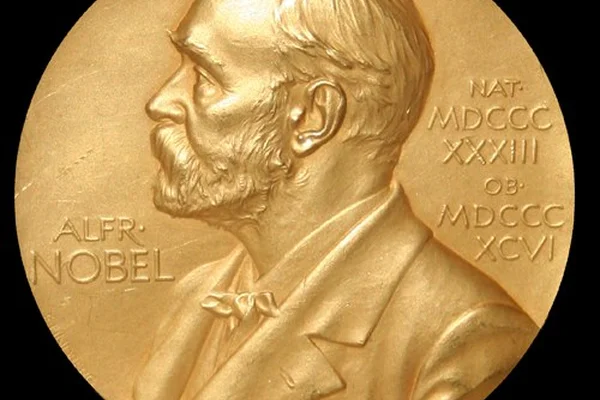
Francis Halzen wins 2026 Nobel Prize in Physics for IceCube neutrino observatory
The Royal Swedish Academy of Sciences honored the University of Wisconsin Madison physicist for building a cubic kilometre detector in Antarctic ice that opened a new field of astronomy.
Comments (0)
Log in or sign up to leave a comment.
No comments yet. Be the first to share your thoughts.