Merck and Moderna said on August 19, 2026 that intismeran autogene — a personalized mRNA-based individualized neoantigen therapy (INT) the companies are jointly developing — met both its primary endpoint of recurrence-free survival (RFS) and a key secondary endpoint of distant metastasis-free survival (DMFS) in the Phase 3 INTerpath-001 trial in patients with completely resected stage IIB-IV cutaneous melanoma. The result is the first positive Phase 3 readout for any mRNA-based cancer therapy and the first Phase 3 study to demonstrate a clinically meaningful improvement over Merck's Keytruda alone in the adjuvant setting for patients with resected melanoma.
What the Trial Showed
The trial enrolled 1,137 patients who, following complete surgical resection, were randomized 2:1 to receive intismeran (1 mg every three weeks for up to nine doses) plus Keytruda (400 mg every six weeks up to nine cycles) versus Keytruda alone for approximately one year. At a pre-specified interim analysis, intismeran plus Keytruda demonstrated statistically significant and clinically meaningful improvements in RFS and DMFS compared with Keytruda alone for patients with completely resected stage IIB, IIC, III or IV cutaneous melanoma who had not undergone prior systemic therapy. Detailed data will be presented at an upcoming international medical meeting. The trial will continue to evaluate other key secondary endpoints, including overall survival.
Why the Stock Reaction Was So Extreme
Moderna's share price jumped as much as 170 percent on August 19, adding roughly $45 billion to the company's market capitalization in a single day. Merck's shares also spiked by double digits, and Moderna rival BioNTech — which is working on similar neoantigen-vaccine programs — saw its stock rise sharply. The total collective gain across the three companies was about $92 billion. William Blair analyst Myles Minter projected the 50-50 revenue split between Merck and Moderna could eventually yield $5.4 billion in peak annual sales for intismeran in melanoma alone. RBC analyst Luca Issi wrote that the development program spanning nine Phase 2 and Phase 3 trials now has "a halo" over it, with mid-stage results in kidney and bladder cancers potentially coming later this year or in 2027.
The Five-Year Phase 2 Backdrop
The Phase 3 readout builds on five-year follow-up data from the Phase 2b KEYNOTE-942/mRNA-4157-P201 trial presented at the 2026 ASCO Annual Meeting in June, which showed that intismeran plus Keytruda reduced the risk of recurrence or death by 49 percent (HR=0.51; 95 percent CI, 0.294–0.887) and the risk of distant metastasis or death by 59 percent (HR=0.411; 95 percent CI, 0.200–0.843) compared with Keytruda alone. Evercore ISI analyst Cory Kasimov cautioned that the stock reaction "already prices in substantially more conviction than the data disclosed thus far supports." Leerink Partners analyst Daina Graybosch called the reaction "overly optimistic" and warned that the implied per-patient manufacturing costs and assumptions of success in other indications may not hold. Moderna management has said a 20 percent reduction in recurrence risk is the clinical benchmark for the program.
The Broader Pipeline Implications
Merck and Moderna have been mRNA R&D partners since 2016. Merck paid Moderna $200 million upfront to begin the alliance on what was then called personalized cancer vaccines. In 2022, Merck paid an additional $250 million to exercise its option for intismeran, known in earlier stages as mRNA-4157. Per the agreement, the two companies share equally in further development and commercialization. The INTerpath program now consists of nine total Phase 2 and Phase 3 trials across melanoma, non-small cell lung cancer, bladder cancer, renal cell carcinoma and other tumor types. The result lands against a rocky backdrop for mRNA vaccines generally: the U.S. Department of Health and Human Services stopped funding mRNA vaccine research last year, though the FDA approved Moderna's mRNA-based flu vaccine mFLUSIVA for adults 50 and older on August 5.
What to Watch Through Year-End
Three checkpoints follow. The detailed Phase 3 data presentation at an upcoming international medical meeting will be the first opportunity for analysts to compare the magnitude of the recurrence-risk reduction against the 49 percent Phase 2b figure. Merck and Moderna will engage with regulators on filing submissions in the coming months, with the FDA likely to grant priority review given the unmet need in high-risk resected melanoma. And the Phase 2 results in kidney and bladder cancer, expected in late 2026 or early 2027, will determine whether the 50-50 economics extend to additional tumors that, combined with melanoma, could push intismeran well beyond the multibillion-dollar peak-sales estimates.
Related Articles
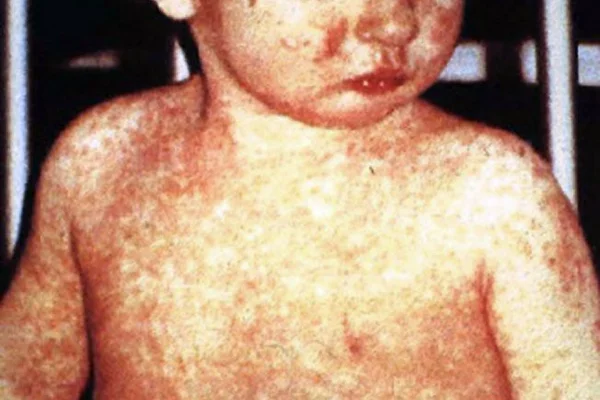
US measles cases reach 4,080 in 2026, highest annual total since 1991 as Pennsylvania surges
CDC data show 4,080 confirmed measles cases as of October 8, 2026, nearly double last year's total, with Pennsylvania reporting 1,136 cases and five deaths.
WHO Issues First Global Guidelines on Child Obesity, Rejecting Drugs and Surgery for Under 10s
The UN health agency's first guidance on paediatric obesity puts structured diet, activity and behaviour support ahead of medicines and surgery for the youngest patients.

FDA approves Novartis Rhapsido as first treatment for symptomatic dermographism
Novartis's oral BTK inhibitor becomes the only prescription medicine cleared for both symptomatic dermographism and chronic spontaneous urticaria.
Comments (0)
Log in or sign up to leave a comment.
No comments yet. Be the first to share your thoughts.