NASA and SpaceX have delayed the launch of Crew-13, the next crew rotation mission to the International Space Station, after engineers found an oxidizer leak in the propulsion system of the mission's Dragon spacecraft during routine prelaunch processing. The mission had been scheduled to lift off no earlier than September 12, 2026, and NASA said it has not yet set a new target launch date. NASA's space station blog reported on Aug 29 that the leak was detected during standard spacecraft processing and that teams are conducting additional testing and reviewing data before the vehicle is cleared to fly. NASA, speaking through a ScienceDaily release dated Sep 1, said the four-person crew will join Expedition 75 once they reach the station, and that any repairs will be completed before Dragon is cleared for flight.
The delay is a reminder that crewed spaceflight is a domain where a small technical problem on the ground can push back a mission by weeks, and where the margin for error is deliberately near zero. The Dragon spacecraft has flown astronauts to the station many times, but each vehicle is individually tested before its first flight, and the oxidizer leak, found in the propulsion system that Dragon uses to maneuver in orbit, is exactly the kind of issue that must be fully understood before people climb aboard. Spectrum News 13 reported on Sep 1 that the leak was found during prelaunch preparations and that NASA and SpaceX are treating it as a processing issue rather than a design problem, but the agency has been careful not to offer a timeline for resolution.
Key Facts
NASA's blog post on Aug 29 confirmed that the Crew-13 launch date is being adjusted to address an oxidizer leak on Dragon's propulsion system that was detected during standard prelaunch spacecraft processing. The mission had been scheduled to launch no earlier than September 12, 2026, from Space Launch Complex 40 at Cape Canaveral Space Force Station in Florida aboard a SpaceX Falcon 9 rocket, according to NASA's mission page. ScienceDaily, citing NASA, reported on Sep 1 that the four crew members are NASA astronauts Jessica Watkins and Luke Delaney, who will serve as commander and pilot, along with CSA astronaut Joshua Kutryk and Roscosmos cosmonaut Sergey Teteryatnikov as mission specialists.
Crew-13 is the 13th crew rotation mission of SpaceX's human space transportation system and its 14th flight with astronauts, including the Demo-2 test flight, under NASA's Commercial Crew Program. The four crew members will join Expedition 75, the station's long-duration crew, once Dragon docks with the orbiting laboratory, according to NASA's Sep 1 release. The astronauts will begin quarantine about two weeks before the flight at NASA's Johnson Space Center in Houston, a standard precaution to reduce the risk of illness before launch. NASA said it will announce a new launch date once testing, data reviews and any necessary work on the spacecraft have been completed.
The crew profile is notable for its international makeup. Jessica Watkins, a geologist and former NASA astronaut, will command the mission, making her one of the few women to command a Commercial Crew flight to date. Luke Delaney, a naval aviator and test pilot, will serve as pilot. Joshua Kutryk represents the Canadian Space Agency, continuing Canada's long record of flying on Commercial Crew missions, and Sergey Teteryatnikov flies for Roscosmos under the crew exchange agreement that keeps both US and Russian astronauts on the station even as geopolitical tensions have complicated other areas of the space partnership. The four-person crew reflects the station's status as one of the last arenas where the US and Russia continue to cooperate directly.
Analysis
What this really means is that the Commercial Crew program has reached the point where launch delays are a routine part of the operational rhythm rather than a cause for alarm, and that is itself a sign of maturity. A decade ago, a leak in a crewed spacecraft's propulsion system would have dominated headlines for weeks and raised fundamental questions about the vehicle's safety. Today, NASA and SpaceX treat it as a processing issue, announce that they are adjusting the date, and go quiet while the engineers work. That confidence is earned: Dragon has now flown astronauts to the station more than a dozen times, and the program has established a track record that allows both the agency and the public to treat a leak as a fixable problem rather than a crisis.
The bigger picture here is that the station's crew rotation has become routine enough that the interesting stories are the ones happening around the edges, like the growing role of international partners and the steady cadence of Commercial Crew flights. The Crew-13 delay also matters for what it does not change: the station is not in danger, the crew is safe on the ground, and there is no pressure to launch before the vehicle is ready. That stands in contrast to earlier eras of human spaceflight, when schedule pressure sometimes pushed missions forward before all the risks were understood. The willingness to delay is the system working as designed.
The delay also carries a subtle message about the commercial space industry's capacity. SpaceX's Falcon 9 and Dragon have become the workhorses of American human spaceflight, and any hiccup in that system has ripple effects across the station's schedule, the crew exchange agreement with Roscosmos and the research calendar aboard the ISS. The longer the delay runs, the more it will test the station program's flexibility, though NASA has built enough margin into the rotation schedule to absorb a slip of a few weeks. For now, the disciplined response to the leak is the story, and it is a reassuring one.
Why It Matters
For NASA and its international partners, the delay is a scheduling problem that will be resolved on the vehicle's timeline, not the calendar's, and it demonstrates the resilience of a crew rotation system that can absorb slips without endangering the station's operations. For SpaceX, the incident is a test of its ability to diagnose and fix a propulsion issue on a crewed vehicle while maintaining the confidence of NASA and the public. For the crew, the delay means more training time and a longer wait, but it also means they will fly on a vehicle that has been fully cleared. And for anyone watching the broader arc of human spaceflight, the episode is a reminder that the mundane work of spacecraft processing, checking for leaks, testing valves, reviewing data, is what makes the spectacular parts possible.
Next Up
In the coming weeks, watch for NASA's announcement of a new launch date once the oxidizer leak investigation is complete, and for whether the delay shifts other missions on the station's schedule. Watch also for SpaceX's engineering updates on the cause of the leak, which will determine whether this is a one-off processing issue or something that affects the broader Dragon fleet. The bigger question is how the Commercial Crew cadence holds up through the end of 2026, and whether Crew-13's delay is an isolated event or a sign of growing strain on a system that is flying more missions than ever before. The station's research schedule, the cargo resupply calendar and the seat-exchange agreement with Roscosmos all depend on a reliable crew rotation, and every week the delay stretches will ripple through those interlocking plans.
Related Articles
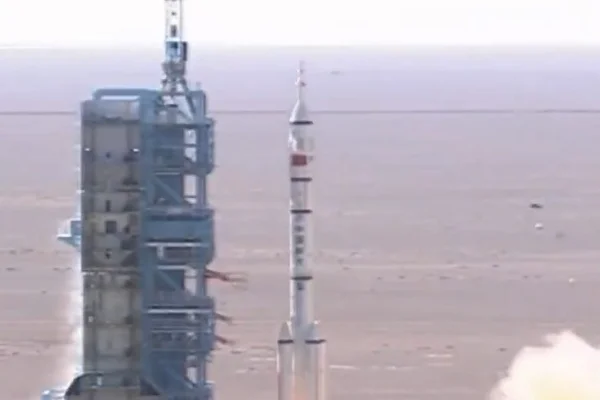
Galactic Energy's Pallas-1 Reusable Rocket Reaches Orbit on Maiden Flight
A Chinese launch company has flown a vehicle engineered for booster reuse to orbit on its debut, a milestone that shifts the competitive baseline for the country's commercial launch industry. The design target of two dozen flights per first stage is unproven until a booster actually returns, but the rocket's maiden success clears the first hurdle toward that economy.
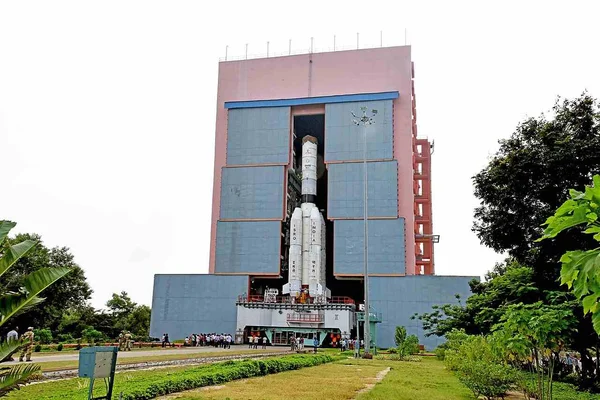
ISRO Prepares GSLV-F17 Launch as NavIC Navigation Constellation Sits Below Minimum
India is readying a heavy rocket for a Sept 4 flight carrying an Earth-imaging satellite, even as its homegrown navigation system has slipped below the four-satellite floor for reliable positioning. The mission is the first step in a chain of launches meant to restore NavIC.
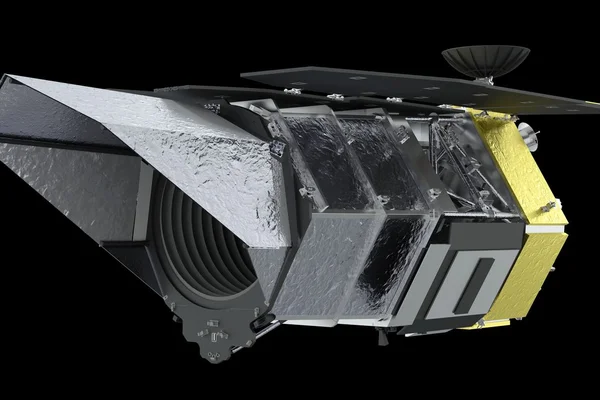
NASA's Roman Space Telescope Launches on Falcon Heavy to Map the Dark Universe
NASA's $4.3 billion Nancy Grace Roman Space Telescope launched August 30 on a SpaceX Falcon Heavy, beginning a mission expected to catalog 100,000 exoplanets and map billions of galaxies.
Comments (0)
Log in or sign up to leave a comment.
No comments yet. Be the first to share your thoughts.