SpaceX launched 29 Starlink satellites aboard Falcon 9 booster B1067 from Cape Canaveral Space Force Station at 5:33 a.m. EDT on August 25, the booster's 37th mission and a new record for the workhorse Falcon 9. The launch brought the total Starlink constellation to more than 11,000 active spacecraft, Spaceflight Now reported. The mission may be the last Starlink flight from Cape Canaveral for a while, with SpaceX's East Coast launch team being refocused on Starship preparations.
Roman Telescope Encapsulated
On August 24, SpaceX sealed NASA's Nancy Grace Roman Space Telescope inside the payload fairing of a Falcon Heavy rocket at Kennedy Space Center, completing the bus-sized observatory's final encapsulation ahead of a targeted August 30 liftoff from Launch Complex 39A. NASA, SpaceX, and the Roman mission team completed the Flight Readiness Review on August 21, formally clearing the observatory to proceed with final launch preparations. Technicians loaded the observatory with 290 gallons (1,100 liters) of hydrazine fuel on July 25 and attached it to its payload adapter in early August.
What Roman Will Study
Roman is NASA's newest flagship space telescope, designed to provide astronomers with a much broader view of the cosmos than Hubble or Webb can deliver. Its observations are expected to support investigations into the history and expansion of the universe and the demographics of exoplanets. NASA's Roman mission is expected to survey billions of galaxies and capture a wide-field infrared view roughly 100 times the area of Hubble's deepest fields at similar resolution. The mission is a precursor to LISA, the gravitational-wave observatory planned for orbit in the next decade, which scientists expect will detect the mergers that Roman catalogs.
Why the Reuse Milestone Matters
B1067 first flew in June 2021 on the CRS-22 mission to the International Space Station and has since launched Crew-3, Crew-4, two Space Station resupply missions, two commercial geostationary communications satellites, and 26 Starlink missions, SpaceX said. Reuse economics now drive SpaceX's launch cadence: the company has flown 100 orbital missions already this year, and Starlink missions account for most of the cadence, with 76 launched from Vandenberg Space Force Base. The August 24 launch from Florida brought SpaceX's 2026 Starlink count from Cape Canaveral to a final figure of one mission before the focus shifts to Starship.
What to Watch Through Year-End
Three checkpoints follow. The Roman launch window opens at 7:26 a.m. EDT on Sunday, August 30, with a backup opportunity on Monday, August 31; a successful launch will deliver the observatory to its Sun-Earth L2 transfer orbit and begin a commissioning campaign that runs through Q4 2026. SpaceX's next Starship test, expected in September from Starbase, will determine whether the booster reuse economics that have made Falcon 9 the workhorse of the industry translate to the much larger vehicle. And Starlink's pending direct-to-cell service launch with T-Mobile, expected later this year, will be the first commercial test of satellite-to-phone connectivity at scale.
Related Articles
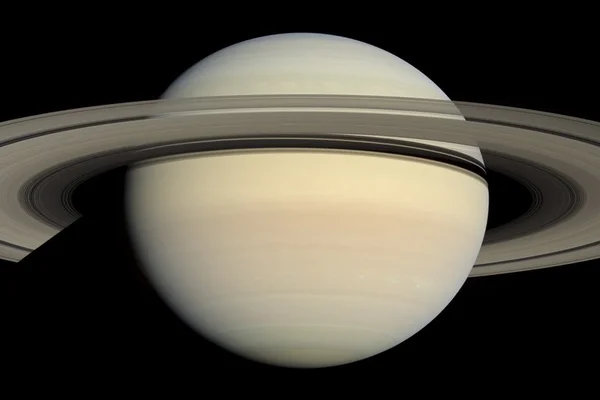
China Postpones Chang'e-7 Lunar South Pole Launch as NASA Funds 18 Futuristic Concepts Including 10,000 Femtosats to Saturn
China postponed the Chang'e-7 lunar south pole mission on August 24 due to bad weather at Wenchang. The same day, NASA announced 18 NIAC-funded futuristic spaceflight concepts, including a proposal to send 10,000 'femtosats' to Saturn. The two stories bracket a week of contrasts in space exploration.
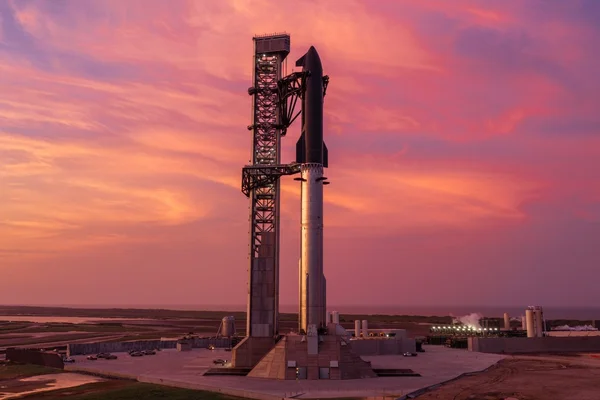
SpaceX Hits 100th Falcon 9 Launch of 2026 as Trump Signs National Space Policy Targeting 1,000 Annual U.S. Launches
SpaceX completed its 100th Falcon 9 mission of 2026 on August 22, lifting 27 Starlink satellites from Vandenberg. The same day, President Trump signed a new national space policy directing NASA and the Department of Commerce to enable 1,000 U.S. rocket launches annually by 2030.
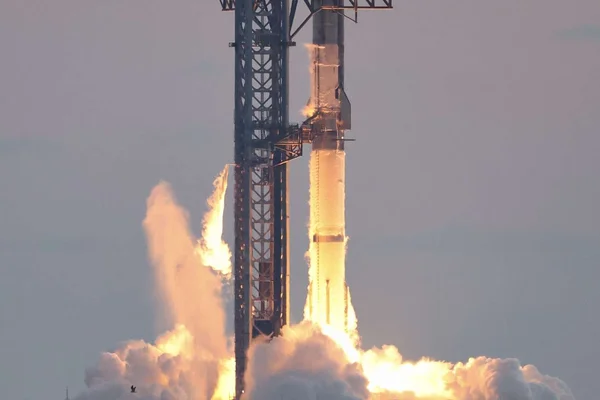
SpaceX Completes Starship Flight 14 Static Fires as NASA Administrator Isaacman Targets Artemis III for June 2027
SpaceX completed single-engine and full six-engine static fires of Ship 41 on August 19–20, paving the way for the first orbital Starship test flight in early-to-mid September. One day later, NASA Administrator Jared Isaacman said Artemis III could launch from Kennedy Space Center as early as June 2027.
Comments (0)
Log in or sign up to leave a comment.
No comments yet. Be the first to share your thoughts.