A SpaceX Falcon 9 lifted Globalstar satellites from Cape Canaveral on August 15, triggering sonic booms across central Florida as the booster returned to Landing Zone 1. The mission was SpaceX's 52nd orbital launch from the Space Coast in 2026, matching the same week that NASA formally confirmed the Nancy Grace Roman Space Telescope's August 30 launch window from the same Florida range.
The Globalstar Mission
The Falcon 9 launched the Globalstar FM-15 and FM-16 spares — a pair of satellites intended to refresh the company's low-Earth-orbit constellation that supports satellite-phone and asset-tracking services. Booster B1067 flew its 24th mission and returned to Landing Zone 1 roughly seven minutes after liftoff, marking the SpaceX booster's second flight of August. The fairings were recovered by SpaceX support vessel Bob.
52 Launches and Counting
The August 15 mission was the Space Coast's 52nd launch of 2026, with SpaceX responsible for the majority of the count — United Launch Alliance, Blue Origin, and NASA programs contributed the remainder. The 52-launch pace is consistent with the SpaceX's FY2026 cadence announced earlier this year and supports the company's plan to retire the Falcon 9 in favor of Starship for cargo missions after 2027, with crew missions transitioning later.
Roman on August 30
NASA confirmed August 13 that the Nancy Grace Roman Space Telescope will launch aboard a Falcon 9 from Kennedy Space Center no earlier than August 30. Roman's primary mirror is 2.4 meters — the same diameter as Hubble — but its 0.28 square-degree Wide Field Instrument delivers a field of view roughly 100 times larger. Once operational, Roman will survey a billion galaxies over five years and generate the deepest wide-field infrared map ever produced. NASA's last update covers the heat-pipe instrumentation that previously raised questions about the launch date.
Why the Pair Matter
Two consecutive orbital firsts in three weeks — Globalstar constellation replenishment and a flagship-class space telescope — show how the Cape's manifest has become a working example of mixed commercial and science throughput at scale. With NASA planning Artemis II crew thank-yous at Red Rocks and Artemis II's lunar flyby already complete (April 1-11, 2026), 2026 is shaping up to be one of the Space Coast's busiest years on record.
Related Articles

SpaceX Hits 100 Missions in 2026 With Starlink 17-50 From Vandenberg, as Falcon 9 Lands for the 651st Time
SpaceX launched Starlink Group 17-50 from Vandenberg Space Force Base on August 18, carrying 24 Starlink satellites to LEO and bringing the megaconstellation total past 11,000. The mission was the company's 100th of 2026, the third consecutive year over the century mark, and booster B1097's 12th flight landed on droneship Of Course I Still Love You for the 651st Falcon booster recovery.
SpaceX Targets September 30 for Starship Flight 14, Logs Back-to-Back Falcon 9 Launches on August 15
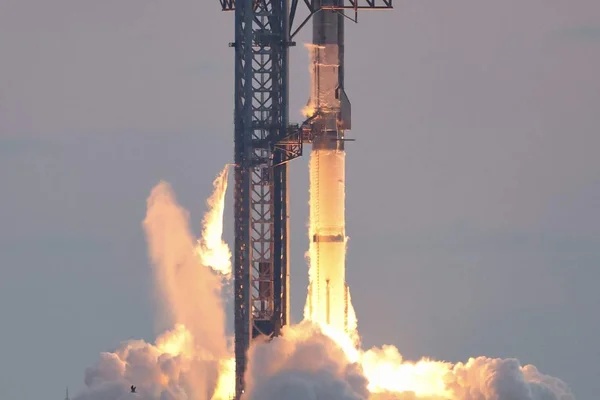
SpaceX confirmed Starship Flight 14, a V3 test mission from Starbase Pad 2, is targeting September 30, 2026, while the company logged back-to-back Falcon 9 launches on August 15 — extending a record cadence that puts the company on pace for 170 orbital launches this year.
SpaceX to Launch Classified USSF-366 Mission on Falcon 9 Booster's 18th Flight
SpaceX is targeting an August 15 liftoff of the classified USSF-366 mission from Vandenberg, with a Falcon 9 first stage flying for the 18th time before attempting a droneship landing in the Pacific.
Comments (0)
Log in or sign up to leave a comment.
No comments yet. Be the first to share your thoughts.