SpaceX's Starlink Group 10-39 mission lifted off from Space Launch Complex 40 at Cape Canaveral Space Force Station on August 21, completing the company's 100th mission of 2026. The cadence keeps SpaceX on pace to set a new annual launch record and consolidates its position as the operational backbone of low-Earth-orbit broadband, with the Starlink constellation now passing 8,400 active satellites in orbit.
What the 100th-Mission Cadence Means
Reaching 100 missions by August 21 means SpaceX has been launching at an annualized rate of roughly 144 missions — and the company has stated that the second half of 2026 is the densest part of its manifest. The Falcon 9 is now the most-flown operational orbital rocket in history, with the Block 5 variant having logged more than 500 flights cumulatively since its 2018 debut. The mission mix this year has been heavily weighted toward Starlink — more than 75 of the 100 missions have carried Starlink satellites — but the cadence also includes commercial-geostationary satellite deployments, NASA crew and cargo missions to the International Space Station, and Space Force classified payloads. The single-launch-to-orbit tempo that SpaceX now operates at is, in operational terms, a national-security asset as well as a commercial one.
The Starlink Constellation's Operational Role
Starlink Group 10-39 carries 29 Starlink satellites to low-Earth orbit, adding to the constellation's existing coverage in the mid-inclination shell that serves North America, Europe and trans-Atlantic routes. The 10-XX shell numbering refers to the orbital plane — Group 10-39 is the 39th refilling mission to that specific shell since the constellation's operational launch cadence began in 2019. With 8,400 active satellites now in orbit, Starlink has effectively become the global default for low-Earth-orbit broadband, with more than 5 million active subscribers across more than 70 countries. The constellation's coverage map now extends to the open ocean and most of the polar regions — a coverage footprint that no other operator can match.
The Reusability Backbone
The 100th-mission cadence is structurally dependent on Falcon 9 first-stage reusability. The booster supporting Group 10-39 is one of SpaceX's most-flown boosters and is targeting its fifth or sixth flight of the year, with landing on an Autonomous Spaceport Drone Ship in the Atlantic Ocean. Booster turnaround times have compressed to roughly 30 to 45 days for the most-flown fleet, with the company's stated long-term goal of less than 24 hours between flights. The economic implication is that marginal launch cost on Falcon 9 has continued to decline, even as the company has invested in Starship — the next-generation fully-reusable launch system that completed a 24-day ocean-tug retrieval of its Starship 40 prototype in mid-August, a recovery that SpaceX framed as a milestone toward operational Starship cadence in 2027.
The Competitive Map for the Rest of 2026
SpaceX's 100th mission lands in a launch market that is becoming structurally more competitive. Rocket Lab has been ramping Neutron development through 2026, with the first orbital Neutron launch scheduled for Q4 2026. Blue Origin's New Glenn has completed five operational launches this year, including two national-security payloads. ULA's Vulcan has flown eight missions in 2026, including the certification missions that completed its national-security-launch Phase 3 contract obligations. The combined non-SpaceX U.S. launch cadence is now roughly 20 missions per year and growing. The international picture is also more active than at any prior point in the commercial-launch era, with ISRO, Rocket Lab (from its New Zealand launch site), and several Chinese launch providers operating at full capacity. Even so, SpaceX's 100-mission-in-eight-months cadence remains unprecedented in commercial-launch history.
What to Watch Through Year-End
Three checkpoints follow. The next Falcon 9 mission, scheduled within 48 to 72 hours of Group 10-39, will push the 2026 cadence to 101 missions and toward SpaceX's stated year-end target of 180 missions. The Starship V3 full-stack test campaign is expected to begin in October, with the first orbital Starship V3 flight targeted for late Q4 2026. And the FCC's pending decision on Starlink's second-generation constellation — expected in September — will determine whether SpaceX can begin the planned V2-mini deorbit campaign and accelerate the transition to the next-generation satellite bus.
Related Articles
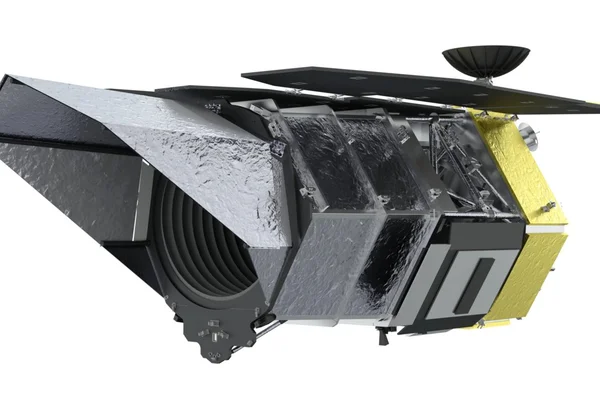
NASA Targets August 30 for the Nancy Grace Roman Space Telescope Launch, Replacing Hubble's Wide-Field Role
NASA is targeting no earlier than August 30 for the launch of the Nancy Grace Roman Space Telescope aboard a SpaceX Falcon Heavy from Kennedy Space Center. Roman will offer a field of view more than 100 times Hubble's and is expected to survey dark energy, exoplanets, and galaxy evolution at survey-scale speed.
SpaceX Hits 100 Missions in 2026 With Starlink 17-50 From Vandenberg, as Falcon 9 Lands for the 651st Time
SpaceX launched Starlink Group 17-50 from Vandenberg Space Force Base on August 18, carrying 24 Starlink satellites to LEO and bringing the megaconstellation total past 11,000. The mission was the company's 100th of 2026, the third consecutive year over the century mark, and booster B1097's 12th flight landed on droneship Of Course I Still Love You for the 651st Falcon booster recovery.
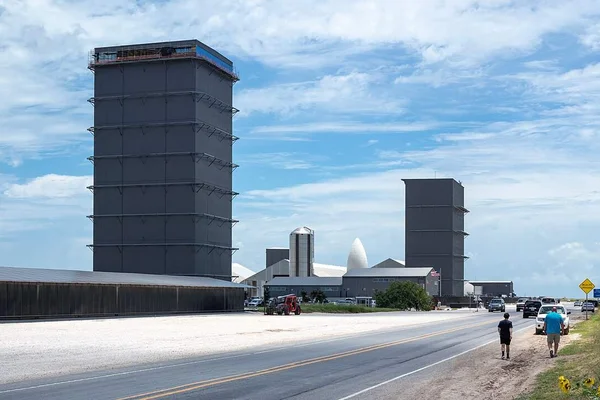
SpaceX Falcon 9 Lifts Globalstar Satellites on August 15, Bringing the 2026 Space Coast Launch Count to 52 With Roman Set for August 30
A SpaceX Falcon 9 lifted Globalstar satellites from Cape Canaveral on August 15, delivering sonic booms across central Florida and pushing the 2026 Space Coast launch count to 52. NASA confirmed two weeks later that the Nancy Grace Roman Space Telescope will launch from the same complex on August 30.
Comments (0)
Log in or sign up to leave a comment.
No comments yet. Be the first to share your thoughts.