ETH Zurich and VUB Launch Global Glacier Extinction Explorer Mapping Every Glacier
A new interactive map built on Nature Climate Change research projects when each of the world's glaciers could vanish at 1.5C, 2.0C, 2.7C and 4.0C of global warming.

Clean energy, carbon capture, green hydrogen, and the tech racing to cool the planet.
106 articles
A new interactive map built on Nature Climate Change research projects when each of the world's glaciers could vanish at 1.5C, 2.0C, 2.7C and 4.0C of global warming.
A super El Nino has pushed Indonesia's peatland fires to the top of global wildfire emissions, with Pontianak's air quality index reaching 483 on September 13, 2026.
The Dragonera buoy hit 33.02 degrees Celsius on August 5, 2026, the highest sea water reading in Puertos del Estado's network, while AEMET logged a record 61 heatwave days.
New modelling from the Canadian Climate Institute finds Canada will not reach its 2030 emissions target before 2050 and will miss net zero by 460 megatonnes, with a 202-megatonne gap in 2040.
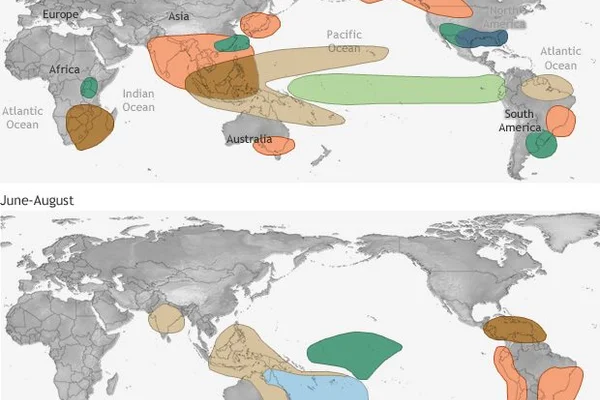
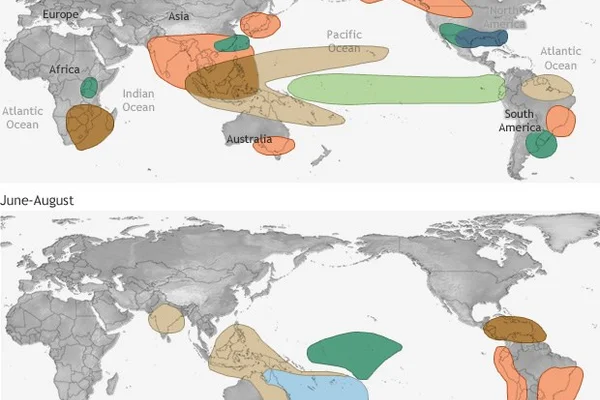
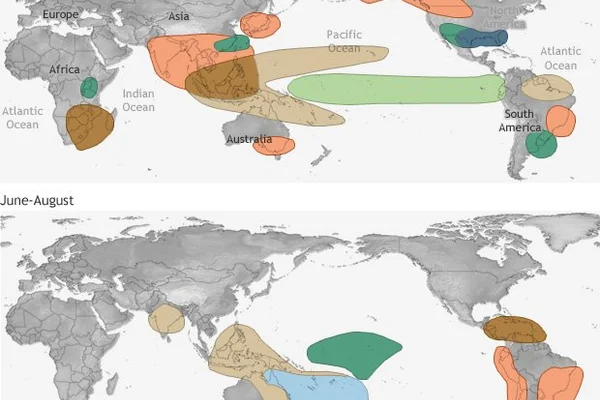
The U.S. Climate Prediction Center has issued an El Niño Advisory, warning that conditions could surpass every event since 1950 and disrupt global weather and food markets.
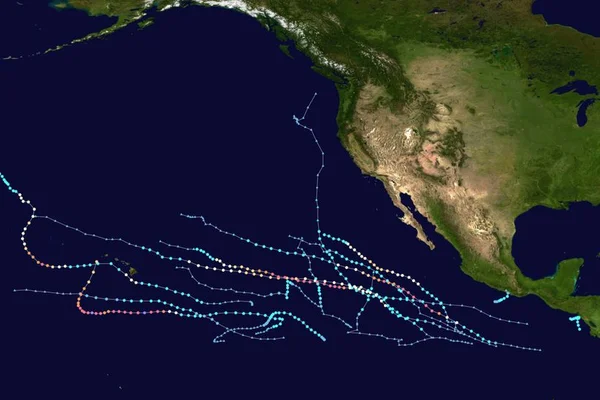
Residents of Hawaii's western islands spent a third consecutive week under storm alerts as one powerful cyclone after another formed in El Nino-warmed Pacific waters.
The annual bulletin says conventional pollution models may undercount fire-related deaths by as much as 93 percent, complicating the case for mass-based air quality targets.
Entire communities have shut schools and workplaces as smoke from routine land-clearing fires drifts across national borders once again.
Panama and Peru are under official emergency declarations as forecasters expect the Pacific's strengthening warming pattern to approach the most intense levels seen since modern record keeping began.
With more than 1,300 dead and 5,000 missing after August glacial floods, Kathmandu is pressing major emitters to fund recovery as an obligation, pointing to a damage bill estimated near $2.6 billion.
The assessment, led by Inger Andersen, warns that warming is already near 1.4 degrees and rising about 0.25 degrees each decade, and it calls on the heaviest emitters to zero out their releases first and then remove more carbon than they add.
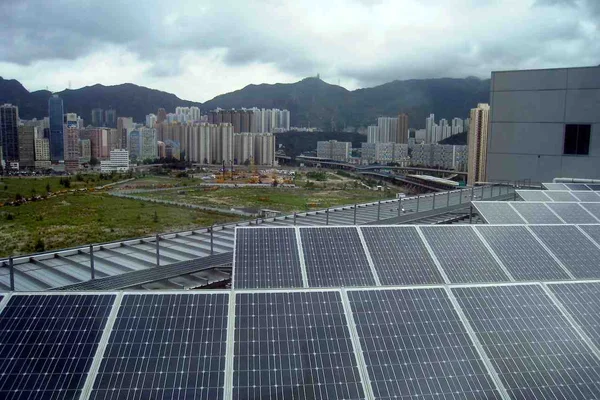
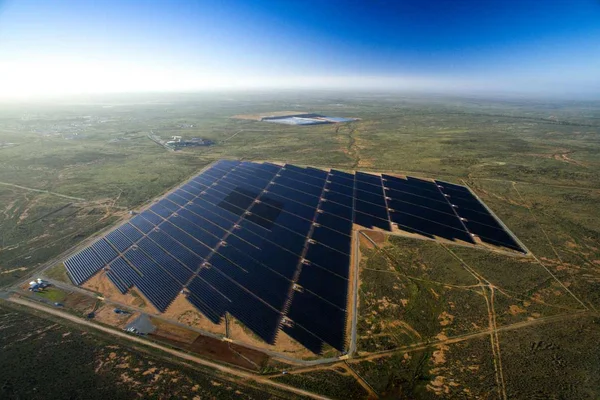
The world's biggest emitter has reached a symbolic turning point in how it builds power plants, even as its coal fleet keeps running around the clock. Capacity figures tell only part of the story, because panels generate far fewer hours than boilers, and the real test of the milestone lies in storage, transmission and the grid's willingness to absorb a steep daily solar ramp.
The new winter minimum for grid demand, reached at the height of a sunny afternoon, highlights how fast household panels are eroding the business of large generators and stiffening the case for storage and flexible demand.
Sales of debt earmarked for climate projects hit a quarterly peak of $193 billion, powered by a 34% jump from European issuers, according to Moody's. The regional divide shows capital rushing toward Europe's green rules while the United States retreats from climate finance.
A study published in Science on August 27 reconstructed 1,000 years of sea surface temperature from Galapagos corals and found El Nino variability is about 36% greater than pre-industrial levels, pointing to human-caused warming as the driver.
Forecasters warned of 110°F heat in the Southwest, flash flooding in the Mid-Atlantic, and active wildfires in the Pacific Northwest on August 27, capping a summer that ESA data shows was the second-warmest globally on record.
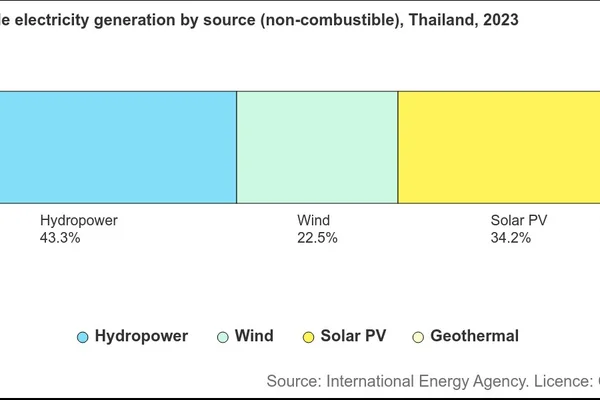
Thailand plans to generate 60 percent of its electricity from solar, wind, and hydro within 25 years, double its previous goal, as the Iran war pushes the country away from imported gas, Bloomberg reported.
The Natural Resources Defense Council published analysis on August 25 projecting that Trump's fossil fuel agenda will cost $700 billion in lost clean-energy investment, add 69,000 early deaths over a decade, and double power-sector CO2 by 2035.
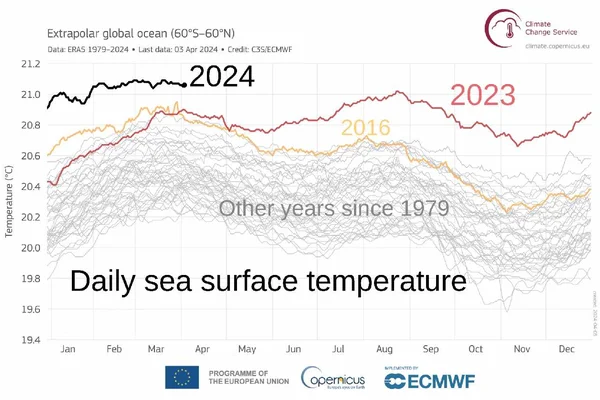
The Copernicus Climate Change Service said average sea-surface temperatures reached 21.10°C on August 22, edging past the March 2024 record and confirming a 'super' El Niño still some way from its expected peak between November and January.
Global mean sea-surface temperature hit a record 21.18°C on August 23, 2026, surpassing the previous record from August 2023 by 0.07°C, according to NOAA and the Copernicus Marine Service. The Guardian and AP linked the new record to a strengthening El Niño and warn of cascading effects on coral reefs and storm intensity.
The Supreme Court granted cert in Suncor Energy v. Boulder County on August 22 and will hear oral argument in its October sitting. A ruling for the energy companies could shut down more than two dozen similar state-law climate suits and shift billions in adaptation costs onto local taxpayers.