Venture capital activity across August 18 and 19 produced an unusually coherent message: investors are paying up for companies that control hard-to-replicate systems, proprietary data, real infrastructure, manufacturing capacity, or regulated distribution, rather than for another layer of AI software. The largest transaction of the week is the clearest example. Hypersonic weapons startup Castelion closed more than $1 billion in Series C funding — one of the largest defense-tech rounds of 2026 — according to Tech Startups' August 19 funding roundup.
Why Castelion Got a Billion
Castelion builds low-cost hypersonic strike platforms with a vertically integrated engineering and manufacturing stack. The Series C is structured to scale that stack: funding goes to expand the company's prototype production lines in Torrance, California, and to accelerate a second product line targeted at the U.S. Navy. Castelion's pitch to investors is that hypersonic strike is a category where the U.S. Department of Defense has signaled sustained demand — the FY2027 budget request, released earlier this month, increases hypersonic-related procurement by 24 percent year-on-year — and where the company's cost position lets it bid aggressively for follow-on production contracts. The Series C was led by a sovereign-wealth-backed investor group, with participation from existing investors including Andreessen Horowitz and General Catalyst.
Reach Capital's $265 Million Fund V
On the same day, Reach Capital announced the close of Fund V at $265 million, giving the early-stage venture firm fresh capital to make a bigger bet on AI startups tackling three deeply human markets: how people learn, stay healthy, and work. Reach Capital, founded in 2009, has historically invested at the intersection of education, workforce, and health technology — categories where distribution is regulated and customer relationships are slow to build. Fund V is the firm's largest to date and will write initial checks between $1 million and $5 million, with reserves for follow-on rounds of up to $15 million.
What Else Got Money This Week
AlleyWatch's August 19 New York City funding report lists K Health, Qualitate, and Status among the day's notable rounds. K Health, the AI-driven primary-care company, raised a growth round to expand its chronic-condition management offering, while Qualitate, a sales-quality platform, raised a Series A led by a consortium of strategic investors. Status, a developer-infrastructure startup, closed a seed extension to accelerate its rollout to additional languages. In Europe and Asia, fintech remained the largest single category by deal count, with neobanks and tokenization-infrastructure startups leading.
The Pattern in the Money
The Castelion and Reach rounds bracket the week's broader pattern: investors are increasingly explicit that the AI software layer alone is no longer enough to clear a premium-multiple round. The premium is being paid for control of underlying physical assets (Castelion's manufacturing), control of regulated distribution (Reach's education and health portfolios), or control of proprietary data and infrastructure (the AI compute-stack companies that raised alongside Castelion). For startup founders pitching in the next quarter, the message from August 18–19 is straightforward: bring evidence of either a defensible system or a defensible distribution, and the capital is there; bring only a model and a slide deck, and the term sheet is harder.
Related Articles

Groq Raises $350M at $3.5B Valuation as It Pivots From Chips to Cloud, With NVIDIA on the Cap Table
AI inference startup Groq closed a $350 million round on August 18 at a $3.5 billion post-money valuation, roughly half its September 2025 mark. The round was led by Disruptive with planned participation from NVIDIA and values Groq's pivot from chip sales to a 'neocloud' inference service at a meaningful discount to its prior peak.
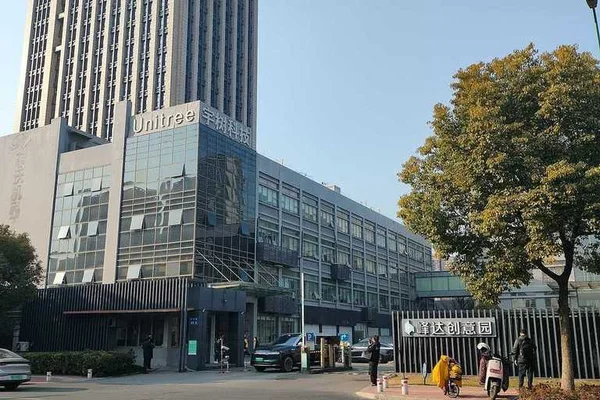
Databricks Lands $5 Billion at $190 Billion Valuation While Unitree Confirms August 19 Shanghai IPO
Databricks closed a $5 billion round led by Coatue, Blackstone, MGX, T. Rowe Price, and new backer Sixth Street Growth at a $190 billion valuation — the largest AI infrastructure round of the year. Three days later, China-side Unitree confirmed its Shanghai stock-market debut on August 19 after raising 6.1 billion yuan ($905 million) in its IPO.

Unitree Prices Shanghai IPO at $904 Million, Becoming First Mainland-Listed Humanoid Robot Maker
Hangzhou-based Unitree priced its Shanghai STAR Market IPO at 150.8 yuan per share on August 10, aiming to raise 6.1 billion yuan ($904 million) and become the first mainland-listed humanoid robot manufacturer, with DeepSeek buying in as a strategic anchor.
Comments (0)
Log in or sign up to leave a comment.
No comments yet. Be the first to share your thoughts.