On August 2, 2026, the European Commission's enforcement powers over general-purpose AI (GPAI) model providers took effect under the EU AI Act, giving the Commission the ability to demand to evaluate models before public release, restrict EU market access, and fine providers up to €15 million or 3 percent of their global annual turnover, whichever is higher. The deadline, set out in Article 101 of the Act, applied on schedule despite the Digital Omnibus on AI's deferral of the high-risk-system deadlines to December 2, 2027 and August 2, 2028. In the United States, FTC Chairman Andrew Ferguson told CNBC's Brian Sullivan at the Technology Policy Institute's Aspen Forum on August 19 that competition among large language model developers looks healthy, but he is watching monopoly risk in chips, power and construction as the bigger antitrust concern.
What the EU Can Now Do
The Commission's enforcement powers include the ability to send requests for information (RFIs) to verify GPAI providers' compliance with the Act and to impose fines if a provider fails to respond or if intentional or negligent breaches are established. Under Article 50, which also took effect on August 2, providers of generative AI systems must mark synthetic audio, image, video and text outputs in a machine-readable, detectable format — a transparency obligation that reaches any AI system offered to EU users or whose output is used in the Union. The Digital Omnibus added a marking grace period through December 2, 2026 for systems already on the market. Most serious violations of the Act — including prohibited AI practices such as manipulation and exploitation of vulnerabilities — can attract fines up to €35 million or 7 percent of global turnover.
What Ferguson Argued at Aspen
Ferguson pointed to near-weekly model releases from Anthropic, OpenAI, Google and Meta as evidence that LLM competition is "pretty ferocious" and declined to put a number on how many major AI labs would represent enough competition. His concern, he said, is that existing monopolies in inputs — chips, energy and construction — could use their market power to squeeze downstream AI developers, or that companies could acquire their way into controlling a chokepoint in the supply chain. "I don't want either existing monopolies to use their monopoly power to maintain their monopolies in illegal ways," Ferguson said. On the consumer-protection side, Ferguson said the FTC has focused on AI companies whose marketing promises exceed what their products actually deliver, contrasting with the prior administration's enforcement posture that he said targeted AI applications simply because they had a "potentially illegal" use.
The Two Frameworks Are Converging Without Meeting
The EU AI Act remains a binding, horizontal regulation built on a tiered risk hierarchy — unacceptable, high, limited and minimal risk — with the heaviest obligations on AI used in employment, credit scoring, biometric identification, critical infrastructure, education and law enforcement. The U.S., having abandoned its own compute-based trigger along with the rescinded Executive Order 14110, has replaced it with a federalism argument: a single national posture, even a light one, beats fifty different state regimes. Colorado's legislature rewrote its AI statute in May 2026 after federal pressure, and the Trump administration issued Executive Order 14365 in December 2025 directing the DOJ to stand up an AI Litigation Task Force to challenge state AI laws it considers onerous. The EU is binding; the U.S. is fragmented. Both are tightening.
What It Means for AI Labs
Anthropic, OpenAI, Google, Meta and the major Chinese AI labs are all now formally in scope of the EU's enforcement powers. A U.S. address does not put a lab outside the regulator's reach — Article 2(1) of the Act covers providers placing AI systems on the EU market from any third country, and non-EU providers and deployers where the AI system's output is used in the Union. Non-EU providers must also appoint an EU-based authorized representative. In a parallel development, the FCC's Covered List blitz — under which the commission added foreign-produced power inverters and advanced robotic devices in July 2026 — is sidestepping the Department of Commerce's Office of Information and Communications Technology and Services, a role-reversal that is creating its own compliance questions for hardware-dependent AI infrastructure.
What to Watch Through Year-End
Three checkpoints follow. The Commission's first set of RFIs to GPAI providers is expected before the end of Q3 2026, with Anthropic, OpenAI and Google as the most likely initial targets. Ferguson's FTC will issue revised merger-review guidance for AI-infrastructure transactions by year-end, with chip and power-supply consolidations likely to face heightened scrutiny. And the next round of state AI laws — in California, Texas and Illinois — will test whether the federal preemption push under Executive Order 14365 succeeds in narrowing state action or, as in Colorado, simply pushes states to legislate narrower rules voluntarily.
Related Articles
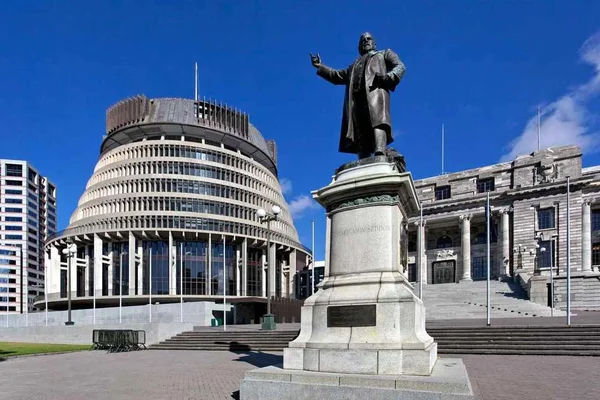
New Zealand Moves to Ban Children Under 16 From Social Media in Online Safety Bill
Prime Minister Christopher Luxon's government introduced a bill on August 25 requiring age checks on Instagram, Snapchat, TikTok, and Facebook, with fines of up to 10% of global revenue for noncompliant platforms, but two coalition partners have said they will vote against it.
Trump Hosts Crypto Executives at White House Summit, Presses Senate to Pass Clarity Act
President Trump hosted crypto industry executives at the White House on August 19, 2026, calling on the Senate to pass the Clarity Act and reaffirming his administration's pro-crypto posture. The event marked the most direct presidential engagement with the digital asset industry since the 2025 Strategic Bitcoin Reserve executive order.

Greece Gazettes Renewable Energy Spatial Framework With 43% Renewables-by-2030 Target and Tighter Wind-Solar Siting
Greece published the Special Spatial Framework for Renewable Energy Sources in the Government Gazette on August 19, replacing the 2008 framework to align with NECP goals of at least 43% renewables in final energy use and 75.7% in electricity by 2030. The framework introduces new wind exclusion areas and recognises storage for balancing.
Comments (0)
Log in or sign up to leave a comment.
No comments yet. Be the first to share your thoughts.