SpaceX sent its second Starfall return capsule into orbit on October 20, 2026, adding a new chapter to the company's effort to turn the return leg of spaceflight into a commercial service. A Falcon 9 rocket lifted off at 7:04 a.m. EDT (1104 UTC) from Space Launch Complex 40 at Cape Canaveral Space Force Station in Florida, carrying 32 payloads toward low Earth orbit on a southeasterly trajectory. The Starfall capsule rode atop the satellite stack, a position that made it the last payload scheduled to separate and the centerpiece of a mission dominated by small satellites and two very different return vehicles.
The flight was only the second for Starfall. The capsule first flew on June 23, 2026, on a dedicated Falcon 9 demonstration mission from Cape Canaveral designed to show that it could fly in a controlled manner and survive reentry. SpaceX has said little publicly about the vehicle, and most of its known specifications come from a Federal Aviation Administration environmental assessment published in May 2026. Even so, the second flight gives the company another chance to gather data on a system that it says will support affordable, routine access to the microgravity environment for scientific research and in space manufacturing.
Bandwagon is one of two SpaceX rideshare programs. The other, Transporter, has flown 18 missions. The first Transporter flight in January 2021 delivered 143 payloads, still a single launch record. Bandwagon 5 continued that model by combining commercial small satellites with government and educational payloads, and it added a pair of return capsules that are meant to bring material back from orbit rather than simply place it there.
One of those capsules was Varda Space Industries' W-7, an autonomous free flying platform built to return pharmaceutical materials from orbit. Varda's spacecraft is about three times smaller than Starfall and can reach Mach 25 during reentry. W-7 carried the cancer medicine PROTAC, testing whether microgravity can overcome the drug's poor solubility because molecules can crystallize differently in orbit. The launch had been scrubbed on October 19 because of poor weather in the booster recovery zone, and the 45th Weather Squadron had forecast a 90 percent chance of acceptable weather for the Tuesday attempt.
Key Facts
Spaceflight Now reported on October 20, 2026 that the Bandwagon 5 mission lifted off at 7:04 a.m. EDT (1104 UTC) from Space Launch Complex 40 at Cape Canaveral Space Force Station and carried 32 payloads, including SpaceX's second Starfall reentry capsule and 31 customer payloads. The launch used a southeasterly trajectory to low Earth orbit, and deployment was scheduled to begin at T+57:18, with Starfall releasing last at T+2:48:28.
Twenty of the 31 customer payloads were manifested by Exolaunch. That group included four radio frequency monitoring satellites for HawkEye 360, four ICEYE satellites and six navigation satellites for Xona Space Systems. Planet's Pelican-12 Earth observation satellite also flew on the mission, along with Portal Space Systems' 260 kg Starburst-1 demonstration spacecraft.
The Federal Aviation Administration reported on May 29, 2026 that Starfall is a cylindrical capsule about 0.75 m (2.5 ft) tall with a 3.1 m (10.2 ft) diameter, a mass of about 2,100 kg (4,600 lb) and the ability to carry up to 1,000 kg (2,200 lb) of payload, for a total weight of about 3,100 kg (6,800 lb). The agency also stated that Starfall is not designed or intended for human spaceflight. The capsule can remain in space indefinitely and reenter and be recovered at any time, according to NASASpaceFlight.com, which reported on October 18, 2026 that the vehicle is mounted atop the satellite stack for this mission.
The Falcon 9 first stage was booster B1085, flying for the 19th time after missions including NASA's Crew-9, Fram2, Firefly Blue Ghost Mission 1, RRT-1, SXM-10, SXM-11, MTG-S1, EchoStar 25 and 10 Starlink batches. It targeted a landing on the droneship A Shortfall of Gravitas. Spaceflight Now reported on October 20, 2026 that the landing would be the 167th on that vessel and the 672nd Falcon booster landing. Space.com reported on October 20, 2026 that the first stage landed about nine minutes after launch.
Starfall uses a top plate with cold gas nitrogen thrusters to orient the capsule during reentry. It has a jettisonable heat shield and lands by parachute assisted splashdown, with all elements recovered by SpaceX vessels. A pilot parachute deploys a single drogue parachute, then a main parachute, and the heat shield is jettisoned before splashdown. The FAA assessment describes a splashdown about 700 nautical miles (roughly 1,300 km) off the U.S. west coast in international waters, outside the 200 nautical mile U.S. and Mexico exclusive economic zones and away from marine sanctuaries.
Analysis
What this really means is that the Bandwagon 5 launch is a logistics test as much as a technology demonstration. SpaceX already has a mature ability to send small satellites to orbit at relatively low cost. The harder problem is bringing products, experiments and components home in a controlled, repeatable way. Starfall is designed to do that for up to 1,000 kg of payload, and Varda's W-7 is chasing a similar goal for pharmaceutical samples. Two return capsules on one rideshare mission show that the return leg is becoming a commercial category rather than a one off experiment.
The economics are still unsettled. NASASpaceFlight.com reported on October 18, 2026 that SpaceX's Transporter and Bandwagon missions let small satellite companies, government agencies and educational institutions launch payloads of up to 50 kg for about $350,000, far cheaper than a dedicated Falcon 9. A rideshare seat is one thing; a reliable return slot is another. Starfall's payload capacity is large compared with W-7, which is about three times smaller, but the FAA assessment approved no more than two demonstration missions. That cap makes the current phase a proving ground, not a mature service.
Varda's position shows how fast the field is moving. W-7 was Varda's ninth reentry capsule launched, after W-8 and W-9 on Transporter-18. SpaceX, by contrast, is on its second Starfall flight. The comparison does not settle which approach will win. Varda is focused on a specific market, pharmaceutical materials, while SpaceX is building a general purpose capsule that it says will support point to point cargo delivery and the return of goods manufactured in microgravity. The bigger picture here is that both companies are trying to prove that what goes up can come down on a schedule, with a customer, a recovery crew and a regulatory file attached.
Regulation may be the binding constraint in the near term. The FAA's final environmental assessment evaluated two Starfall landings in the Pacific Ocean, with splashdown and recovery. Issuing the vehicle operator license is a major federal action under NEPA, with the U.S. Coast Guard as a cooperating agency. The document sets out a recovery vessel of up to 200 feet (61 m) and rigid hull inflatable boats, likely operating from ports in Los Angeles or San Diego County. Those details matter because they turn reentry from a spectacle into a logistics operation with ships, beacons and schedules.
Why It Matters
The most immediate stakes are in pharmaceutical research and materials science. Varda's W-7 mission is testing PROTAC, a cancer drug whose poor solubility limits its effectiveness. If microgravity allows the compound to crystallize in a more useful form, the result would be a concrete example of why orbital manufacturing needs a return path. Starfall's larger capacity gives SpaceX room to carry similar experiments and the hardware needed to protect them during reentry.
The mission also shows how public and private infrastructure are merging. The FAA assessment, the Coast Guard role and the Pacific recovery plan are not side details. They are the regulatory and operational scaffolding that any commercial reentry service will need. SpaceX's plan calls for a recovery vessel positioned in advance, an electronic locator beacon and recovery of the capsule, parachutes, top plate and heat shield. Those requirements add cost, but they also create a repeatable procedure that customers can audit.
For the rideshare market, Bandwagon 5 is a reminder that launch is no longer the only bottleneck. Exolaunch manifested 20 of the 31 customer payloads, a sign of how many small satellite operators now depend on aggregated launches. The addition of Starfall and W-7 turns a satellite delivery mission into a two way transport test. If the model works, SpaceX can offer customers a fuller service: launch to orbit, operations in orbit and return to Earth.
Next Up
The immediate next step is recovery. Starfall is expected to splash down in the Pacific Ocean about 1,300 km off the coast of the United States or Mexico during initial tests, according to NASASpaceFlight.com, which reported on October 18, 2026 that SpaceX vessels would recover the capsule and its components. The company will need to show that the heat shield, parachutes and cold gas attitude control system work together.
Beyond this mission, SpaceX intends to fly Starfall on Starship, likely several at a time. That plan depends on Starship reaching a regular cadence, and on regulators allowing more than the two demonstration reentries covered by the FAA assessment. For now, Bandwagon 5 gives SpaceX and Varda another data point in a slow, expensive campaign to make orbital return ordinary.
Related Articles
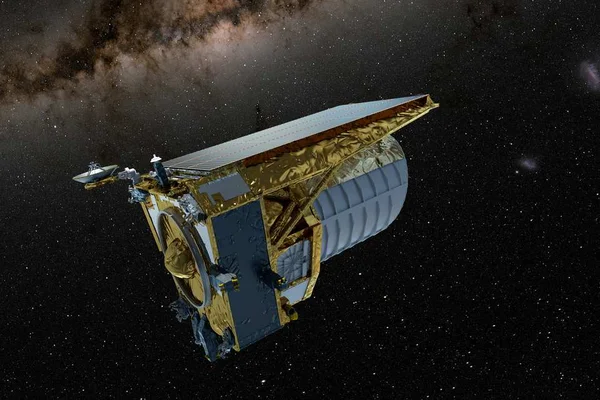
ESA's Euclid Telescope Finds Its First Unknown Comet Beyond the Orbit of Jupiter
A PhD student's motion detection software flagged the streak in survey frames, and ground observatories confirmed the object as a comet on October 8, 2026.
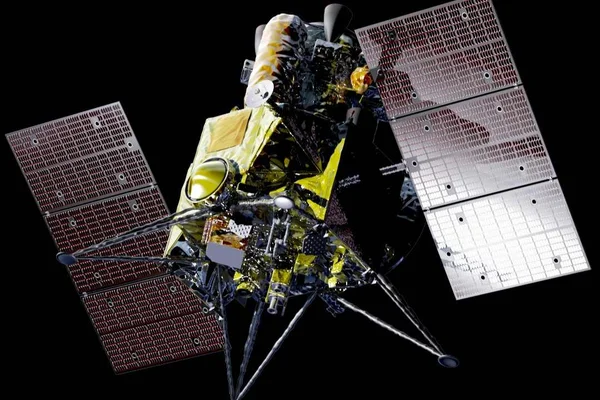
Japan Sets October 20 Launch for World First Phobos Sample Return Mission
The Japanese space agency has confirmed that its Martian Moons eXploration probe will lift off from Tanegashima on an H3 rocket, carrying a German and French rover and NASA instruments to Phobos.
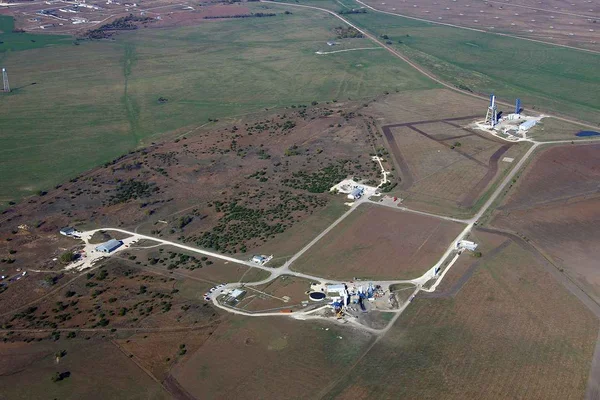
SpaceX asks FAA to allow up to 456 Starship launches a year at Starbase Texas
The Federal Aviation Administration has opened a programmatic environmental review of SpaceX's request to lift its Starbase launch ceiling from 25 flights a year to 456, with public comments due November 30.
Comments (0)
Log in or sign up to leave a comment.
No comments yet. Be the first to share your thoughts.