Satellite trackers spent the third week of October 2026 watching two objects converge over the Southern Hemisphere, and the gap between them kept shrinking. Kosmos 2612, a Russian military spacecraft launched in April 2026 with almost no public disclosure, maneuvered to within a few hundred metres of ICEYE-X36, a US-registered commercial synthetic aperture radar satellite owned by ICEYE US, the American arm of Finland's ICEYE.
The approach unfolded between October 15 and October 19, and by Monday October 19 the Russian craft had begun to move away. Close passes between spacecraft are not new. What makes this one notable is the combination of circumstances: the target is a private Earth-observing satellite rather than a classified government payload, its operator supplies imagery to Ukraine, and the maneuvering spacecraft belongs to the Russian military.
ICEYE builds small radar satellites that image the ground through cloud and at night. The company is headquartered in Finland, but ICEYE-X36 belongs to its US subsidiary, and at least some ICEYE spacecraft supply imagery to Ukraine under a contract signed in January 2026. That connection to a war already underway in Europe is central to how analysts have read the episode.
Rendezvous and proximity operations require a spacecraft to match another object's orbital plane and velocity. In low Earth orbit that is expensive, because plane changes burn large amounts of propellant. A satellite that has already done that work can then move quickly into close formation with relatively little extra fuel, which is exactly what made the pass worth studying.
Key Facts
LeoLabs, the orbital intelligence company whose radars track objects as small as 2 centimetres, described the event in blunt terms. Ars Technica reported on October 19, 2026 that LeoLabs said Kosmos 2612 'conducted a deliberate series of maneuvers toward ICEYE-X36,' closing from hundreds of kilometres away to extreme proximity, maneuvering around the satellite, remaining nearby for an extended period and then beginning to move away. Adam Marsh, LeoLabs' vice president of technical solutions, put the closest approach at within 500 metres (1,640 feet) and said the two were 'likely quite a bit closer than that.'
The tracking numbers sketch a fast, deliberate approach. Between Thursday October 15 and Friday October 16, Kosmos 2612 closed from more than 320 kilometres to about 4.8 kilometres, LeoLabs told Axios, as Al Jazeera reported on October 20, 2026. Over the weekend the Russian craft moved between positions ahead of and behind the ICEYE satellite, at times within roughly 500 metres, with some independent trackers and reports putting the separation under 30 metres. By Monday October 19 it was moving away at a relative velocity of about 10 mph (17 km/h).
The history matters as much as the geometry. Russia launched six satellites, Kosmos 2609 through Kosmos 2614, in April 2026, with Kosmos 2612 riding a Soyuz rocket from northern Russia. CSIS reported on October 15, 2026 that five of the six executed high-energy maneuvers a month later that raised their inclinations to match the orbital plane of the ICEYE satellite, and that Cosmos 2609 passed within 2.5 kilometres of it on May 26, 2026. None stayed plane matched, so the orbits slowly diverged. Then, over two weeks beginning September 30, 2026, Kosmos 2612 executed a series of burns that brought it back into coplanar alignment and nearly the same altitude.
Nothing in that sequence looked routine to the firms watching. LeoLabs called it 'a controlled approach, changes in relative position, close-proximity loitering, additional small maneuvers, and a controlled departure,' and stated that it was 'not a routine conjunction or fly by.' Jonathan McDowell wrote on X that to his knowledge this is the first low Earth orbit rendezvous of two active satellites where one owner did not give approval. Marco Langbroek of TU Delft, who publicized the pass, called it 'a worrisome cat-and-mouse game' in orbit, and Space.com reported on October 21, 2026 that the two spacecraft may at one point have been separated by just a few metres.
Russia has approached Western satellites before, but not a commercial one at this range. Victoria Samson, chief director of space security and stability at the Secure World Foundation, told Space.com that Kosmos 2543 came within about 30 kilometres of USA 245 in January 2020, and that Kosmos 2558 came within about 70 kilometres of USA 326 in August 2022. Both of those were classified National Reconnaissance Office spacecraft. ICEYE-X36 launched in 2024, and ICEYE operates about 80 such satellites in low Earth orbit, with four more due on a SpaceX rideshare that same week. Neither Roscosmos, ICEYE, the US Space Force nor Russian defense officials offered a substantive public explanation in the days after the pass.
Analysis
The first thing to establish is what the maneuver does and does not prove. A close approach is not an attack. Samson noted that such a maneuver is not inherently aggressive, while arguing that context changes the reading, since Russia and Ukraine are literally at war with each other and that tints any interpretation of Russian activity near a satellite feeding Ukrainian intelligence. The propellant cost of the pass, after months of plane matching, is high enough that the encounter was plainly intentional.
The second is that the menu of possible motives remains open. Samson listed several: Russia may be studying ICEYE's radar capabilities up close, attempting to jam or intercept its communications, or simply demonstrating military prowess in a manner that the Ukrainians cannot respond to. Juliana Suess of SWP Berlin told Al Jazeera that a gap under 5 kilometres is essentially a hop and a skip in space, close enough to enable data interception or jamming, though a kinetic attack is possible and less likely. Mark Hilborne of King's College London stressed the consent problem, calling it the first time a country has done such a maneuver against a commercial satellite without any consent. ICEYE chief executive Rafal Modrzewski told Reuters, as Al Jazeera reported on October 20, 2026, that the company moved its own satellite, which appeared to prompt further Russian maneuvering.
The bigger picture here is that low Earth orbit now has an observable social dimension no treaty text anticipated: commercial satellites are infrastructure for militaries, and they are identifiable, trackable and reachable by anyone with enough propellant. That cuts both ways. Samson's observation that you cannot keep the existence of satellites classified because people can see them is a warning as much as a comfort, since the same public tracking data that let analysts document this pass in near real time also lets a state plan one. She also noted that neither China nor the United States is known to have conducted an uncooperative rendezvous in low Earth orbit, which leaves Russia holding a specific and now repeated practice.
What this really means is that the ambiguity is the strategy. Every reading of the encounter, from capability inspection to signals interception to a bare demonstration, is plausible enough to preserve deniability, while the operational effect is to force a commercial operator to spend propellant and attention on evasion. A satellite forced to burn fuel to escape shortens its mission. That is a cost imposed without a shot fired, and it lands on a private company rather than on a military budget.
Why It Matters
The pass tests a norm that was never written down. No treaty provision says a state may not park a spacecraft 500 metres from another operator's satellite, and there is no enforcement mechanism if it does. What has existed is a custom of restraint. The CSIS commentary by Clayton Swope and Chantal Li published on October 15, 2026 argues that the West needs a unified approach to deter Russia from maneuvering into plane matched orbits near non-Russian satellites, and should decide in advance how it would respond to a hostile act in space. Deciding in advance is the hard part, because the same maneuver can be servicing, inspection or a precursor to a weapon.
The commercial dimension raises the stakes beyond any single spacecraft. ICEYE US said its constellation architecture is designed for continuity and resilience, a statement that implicitly acknowledges losing or displacing one satellite is now a scenario worth planning for. Retired Lt. Gen. John Shaw, quoted by Ars Technica, called the maneuver clear messaging that Russia will conduct aggressive activity near commercial assets. With about 80 ICEYE satellites in orbit and more launching on rideshares, the question is whether resilience means redundancy in numbers or a change in how operators maneuver when a stranger arrives.
A legal thread could tighten as well. In October 2022 a senior Russian foreign ministry official told the United Nations that quasi-civilian infrastructure may be a legitimate target for a retaliatory strike. That statement, paired with an actual close approach to a commercially operated radar satellite serving a country at war, gives Western governments a concrete example to cite when arguing that commercial space assets need protection and that operators need clearer rules of behavior.
Next Up
The immediate question is where Kosmos 2612 goes next. As of Monday October 19 it was drifting away at about 10 mph relative velocity, but the spacecraft has already shown it can return to a coplanar orbit after months of separation, so a second approach cannot be ruled out. Trackers will watch whether other members of the Kosmos 2609 to 2614 group resume maneuvering, and whether ICEYE's four new satellites on the SpaceX rideshare become objects of interest. Both spacecraft travel at roughly 17,000 mph (27,000 km/h), so any future encounter will be measured in metres and seconds.
The policy side will move more slowly, but with more consequence. Watch for public statements from the US Space Force, which had already called out earlier Kosmos maneuvers around ICEYE-X36, and for any coordinated Western response weighing the CSIS recommendation to set red lines in advance. The precedent set between October 15 and October 19 is that an unconsented rendezvous in low Earth orbit is possible, observable and, so far, unpunished.
Related Articles
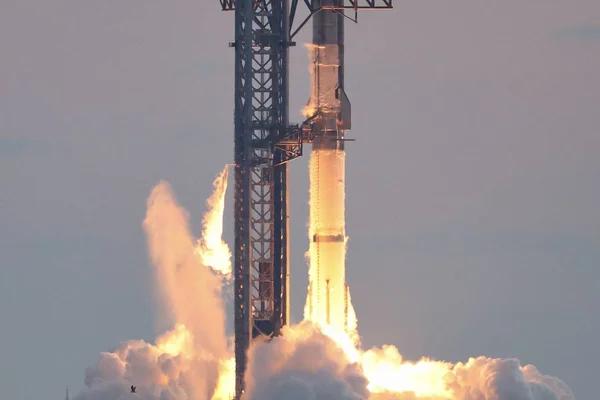
SpaceX to Attempt First Double Starship Tower Catch on Flight 15
Elon Musk says Flight 15 in November will try to recover both Super Heavy and the Ship upper stage, a first for an orbital rocket and a test of SpaceX's reusability strategy.
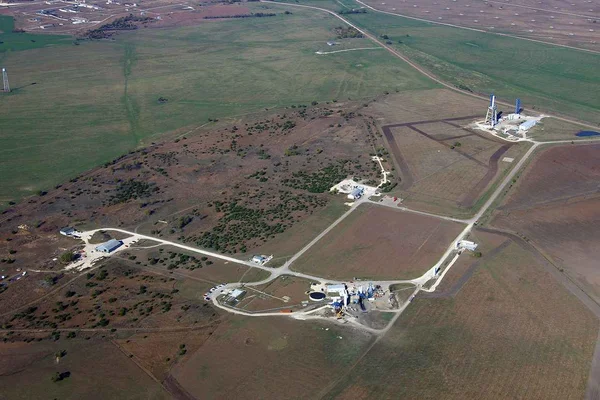
SpaceX flies second Starfall capsule on Bandwagon 5 with 32 payloads
The Falcon 9 mission carried 32 payloads, including Varda's W-7 pharmaceutical capsule and SpaceX's reusable cargo demonstrator, as orbital return services move closer to routine use.
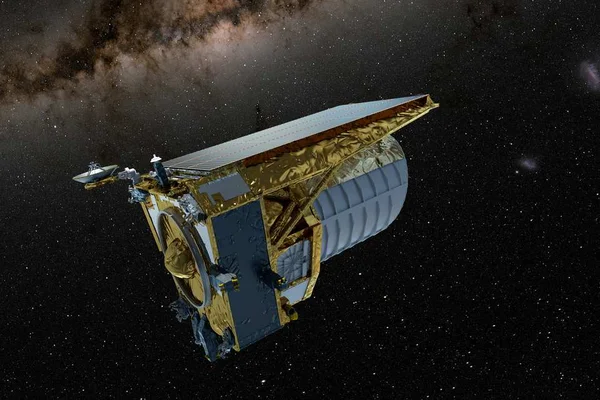
ESA's Euclid Telescope Finds Its First Unknown Comet Beyond the Orbit of Jupiter
A PhD student's motion detection software flagged the streak in survey frames, and ground observatories confirmed the object as a comet on October 8, 2026.
Comments (0)
Log in or sign up to leave a comment.
No comments yet. Be the first to share your thoughts.