SpaceX completed its 100th Falcon 9 launch of the year on August 22, lifting 27 Starlink satellites into low Earth orbit from Vandenberg Space Force Base, the company confirmed in a post-launch press release. The same day, President Trump signed a new national space policy directing NASA, the Department of Commerce and the Department of Defense to enable 1,000 U.S. commercial and government rocket launches annually by 2030 — roughly 2.5x the current flight cadence of 412 launches across all US providers in 2025.
The Falcon 9 Cadence
The August 22 mission, Starlink Group 17-50, was the booster's 18th flight and the company's 100th Falcon 9 launch of 2026 — a rate that works out to one launch every 2.4 days. SpaceX has now exceeded its own annual cadence record every year since 2022. The company declined to break out revenue, but industry analysts at Bryce Space and Technology estimate 2026 Falcon 9 launch revenue at $5.4 billion, plus an additional $2.1 billion in Starlink subscription revenue, a figure that depends on launch cadence. The 100th mission landed the booster on the droneship "Of Course I Still Love You" for the 651st time in program history.
The Trump Space Policy
The new national space policy, signed in the Oval Office on August 22 with NASA Administrator Jared Isaacman and Secretary of Commerce Howard Lutnick present, establishes a target of 1,000 U.S. rocket launches annually by 2030 and directs the FAA's Office of Commercial Space Transportation to streamline launch licensing. The policy also codifies a shift in regulatory authority: the Department of Commerce will assume responsibility for space-traffic management from the Department of Defense, a transition the Trump administration has been working on since the first term. Isaacman told reporters the policy is "an industrial strategy for low Earth orbit and a science strategy for the Moon and Mars, in one document."
What's in the Policy
Five provisions matter for industry. First, a 60-day cap on FAA launch license reviews for missions below 150 km altitude, down from the current 135-day median. Second, a "mission authorization" pathway for reentry capsules that streamlines approvals for Sierra Space's Dream Chaser and SpaceX's crewed Mars missions. Third, a $4 billion authorization over five years for the Department of Commerce to build the TraCSS space-traffic-management system, replacing the DoD's legacy S3ODN. Fourth, language endorsing NASA-private partnerships for the Nancy Grace Roman Space Telescope successor (a flagship to be named the "Habitable Worlds Observatory" per the policy) and Artemis III. Fifth, a directive that all federally funded launches use U.S.-built rockets — a protectionist provision that affects Blue Origin, ULA and SpaceX equally but locks out any future foreign competitors for defense payloads.
Starship Progress
The same week, SpaceX completed a critical static-fire test of Ship 41, the upper stage of Starship V3. The test, conducted at Starbase in Boca Chica, Texas, ran one Raptor 3 engine for a full-duration burn followed by a six-engine burn lasting 60 seconds. Ship 41 carries three atmospheric and three vacuum-optimized Raptor 3 engines and will fly on Starship Flight 14, the first orbital insertion attempt of a fully reusable system, targeted for late August or early September. SpaceX has not yet confirmed the flight date; the FAA is still reviewing the updated flight profile.
What to Watch Through Year-End
Three checkpoints follow. The Starship Flight 14 launch, targeted for the August 30 to September 6 window, will be the first orbital test of a fully reusable system and a prerequisite for SpaceX's NASA HLS Artemis III lunar contract. The FAA's final TraCSS transition plan, due October 1, will determine whether the Department of Commerce's space-traffic authority becomes operational on schedule for the 2027 launch surge. And the FY2027 NASA budget, expected to clear the Senate Appropriations Committee in September, will reveal whether Congress funds the $4 billion Commerce authorization or holds it hostage to broader spending fights — a critical signal for whether the 1,000-launch target becomes a real industrial plan or a campaign slogan.
Related Articles
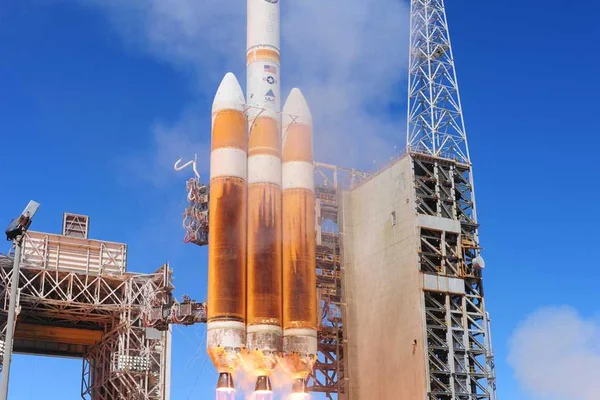
SpaceX Flies Falcon 9 Booster For Record 37th Time as NASA Readies Roman Telescope
B1067 launched 29 Starlink satellites from Cape Canaveral on August 25, while NASA's Nancy Grace Roman Space Telescope was encapsulated inside a Falcon Heavy fairing on August 24 ahead of a targeted August 30 liftoff.
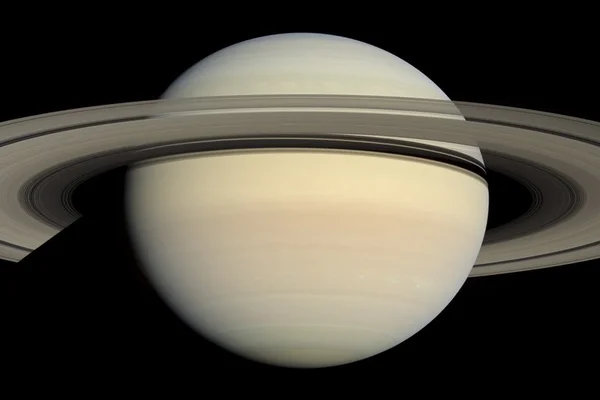
China Postpones Chang'e-7 Lunar South Pole Launch as NASA Funds 18 Futuristic Concepts Including 10,000 Femtosats to Saturn
China postponed the Chang'e-7 lunar south pole mission on August 24 due to bad weather at Wenchang. The same day, NASA announced 18 NIAC-funded futuristic spaceflight concepts, including a proposal to send 10,000 'femtosats' to Saturn. The two stories bracket a week of contrasts in space exploration.
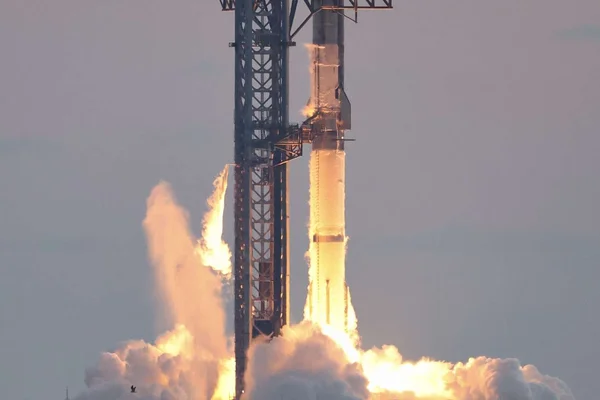
SpaceX Completes Starship Flight 14 Static Fires as NASA Administrator Isaacman Targets Artemis III for June 2027
SpaceX completed single-engine and full six-engine static fires of Ship 41 on August 19–20, paving the way for the first orbital Starship test flight in early-to-mid September. One day later, NASA Administrator Jared Isaacman said Artemis III could launch from Kennedy Space Center as early as June 2027.
Comments (0)
Log in or sign up to leave a comment.
No comments yet. Be the first to share your thoughts.