Roughly 30 California AI bills — covering chatbot safety for children, AI copyright transparency, worker protections from automated decision systems, and frontier-model disclosure — face simultaneous Senate and Assembly 「suspense」 votes this month, on top of the SB 53 frontier-model transparency law that has been in force since January 1, 2026. The federal preemption fight to override state AI rules has stalled in the House, and the Cyberspace Administration of China issued its first fines under generative AI service rules in July — leaving California as the operative jurisdiction for U.S. AI compliance for the rest of 2026.
What SB 53 Already Does
SB 53, signed by Governor Newsom last year and authored by Senator Scott Wiener (D-San Francisco), is the first U.S. law to require transparency on safety practices for the largest frontier AI developers. It requires covered frontier developers to publish safety plans, post summaries of safety evaluations, and operate within a public cloud compute cluster intended to support academic and independent access to compute. The law also provides whistleblower protections for employees at leading AI labs who disclose safety concerns. SB 53 expressly preempts any 「rule, regulation, code, ordinance, or other law」 adopted by California cities or counties on or after January 1, 2025 specifically related to frontier-model risk management — meaning a uniform state-level rule now governs what municipalities cannot.
What the August Final Votes Cover
The August suspense votes include chatbot-safety bills focused on minors — tightening restrictions on how AI companions interact with users under 18 — and copyright-transparency bills requiring clearer labeling of AI-generated content. Worker-protection measures would expand enforcement against algorithmic management practices, requiring disclosure when automated systems are used to make hiring, firing, or scheduling decisions. Other bills address deepfake disclosure for political content, training-data transparency for foundation models, and increased reporting obligations for frontier-model evaluations. If passed, the bills would take effect January 1, 2027, with enforcement beginning in mid-2027.
The Federal Preemption Stalemate
The federal preemption bill that would bar states from regulating AI for ten years has stalled in the House, despite passing committee earlier this summer. A coalition of state attorneys general, led by California, has argued that federal preemption would leave a regulatory vacuum while frontier-model deployment continues to accelerate. The White House has not signaled which side it will take in any conference committee, leaving California — and a growing list of other states — to operate as the de facto AI regulators for the rest of 2026. Texas, Illinois, and Utah have also moved their own AI laws into force in 2026, per Vorp Labs' August 2026 U.S. regulation tracker.
China's First Fines and Hangzhou's Rule
Outside the U.S., the Cyberspace Administration of China has issued its first fines under the central generative AI service rules — and on August 18, Beijing-Hangzhou released China's first city-level generative AI service rules effective September 1, with fines up to 5 million yuan for content-safety or intellectual-property violations. The Hangzhou rules require locally registered providers to complete an algorithm filing before launching and to maintain content-safety audit mechanisms. Combined with California's active rule-making and the EU AI Act's August 2 enforcement milestone, frontier-model providers are now operating under binding safety law in three major jurisdictions simultaneously. The next inflection point is the September 1 Hangzhou effective date, four weeks after the EU's deadline.
Related Articles

EU AI Act's August 2 Deadline Bites as Beijing-Hangzhou Rolls Out China's First City-Level Generative AI Service Rules Effective September 1
The EU AI Act's August 2 enforcement milestone is now active with penalty powers over GPAI providers and Article 50 transparency obligations. Halfway around the world, Beijing-Hangzhou released China's first city-level generative AI service rules effective September 1, with fines up to 5 million yuan for violations of content safety or IP rules.
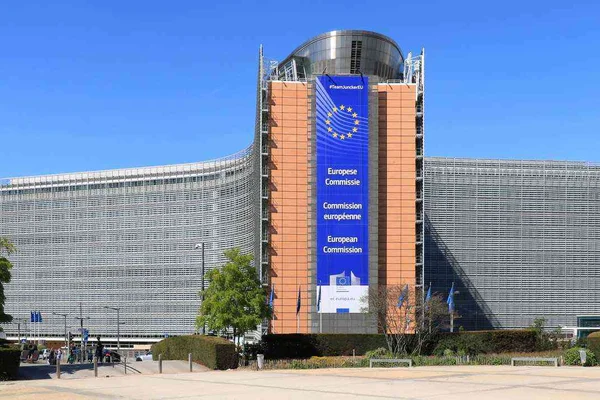
EU AI Act Enforcement Begins: Article 50 Transparency and GPAI Powers Now Live
The EU AI Act's August 2, 2026 enforcement phase is now active: the Commission has penalty powers over general-purpose AI providers, Article 50 transparency obligations apply to most AI systems, and Anthropic and OpenAI face the highest-stakes compliance scrutiny under the new regime.
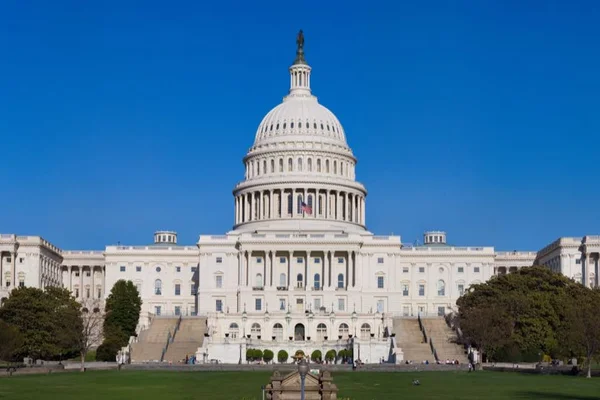
Senator Jim Banks Urges Trump to Incentivize US Open-Weight AI and Curb China's Chip Access
Republican Senator Jim Banks on August 14 urged the Trump administration to create incentives for American open-weight AI development and restrict Chinese firms' access to US chips, warning Chinese open models could be 'weaponized, like rare earths.'
Comments (0)
Log in or sign up to leave a comment.
No comments yet. Be the first to share your thoughts.